

Understanding Traditional 401(k) and Roth 401(k) Plans
A 401(k) is a retirement savings plan offered by employers that allows employees to contribute a portion of their wages to individual accounts. Employers may also contribute to these plans, enhancing the potential growth of the savings.
Traditional 401(k) and Roth 401(k) are the two most common types of 401(k) available. While they share many similarities, there are several key differences between them:
Traditional 401(k)
A traditional 401(k) is an employer-sponsored retirement savings plan where you can contribute a portion of your pre-tax earnings. The contributions reduce your taxable income for the year, providing an immediate tax benefit. Investments grow tax-deferred, meaning you won’t pay taxes on the gains until you withdraw the money, typically in retirement. Withdrawals are taxed as ordinary income, and there are penalties for early withdrawals before age 59½.
Roth 401(k)
A Roth 401(k) is also an employer-sponsored retirement savings plan, but contributions are made with after-tax dollars. This means there’s no immediate tax benefit. However, investments grow tax-free, and qualified withdrawals in retirement are also tax-free, provided you’re at least 59½ and have held the account for at least five years. Unlike a traditional 401(k), you pay taxes upfront, but you won’t owe taxes on your withdrawals later.
Key Differences
- Tax Treatment: Traditional 401(k) contributions are pre-tax, reducing taxable income now, but withdrawals are taxed. Roth 401(k) contributions are after-tax, with tax-free withdrawals.
- Tax Benefits Timing: Traditional 401(k) offers immediate tax benefits, while Roth 401(k) offers future tax-free withdrawals.
- Withdrawal Rules: Traditional 401(k)’s have required minimum distributions (RMDs) starting at age 73, while Roth 401(k) do not have an RMD.
Contribution Limits
The contribution limits for Traditional and Roth 401(k) are the same. For 2026, the contribution limits are:
- Employee Contribution: Up to $24,500 annually.
- Combined Employee and Employer Contribution: Up to $72,000 annually.
- Catch-Up Contribution (Age 50+): An Additional $8,000 or $11,250 is available between the ages of 60 and 63.
Roth vs. Traditional 401(k)
Reasons to Invest in a Roth 401(k)
- Tax-Free Withdrawals: Withdrawals in retirement are tax-free, including earnings, if certain conditions are met.
- No Required Minimum Distributions (RMDs): Roth 401(k) funds can be rolled over to a Roth IRA, which has no RMDs.
- Future Tax Rates: Beneficial if you expect to be in a higher tax bracket in retirement.
- Tax Diversification: Balances your tax exposure between traditional and Roth accounts.
- High Contribution Limits: The same high contribution limits as traditional 401(k) plans.
- Employer Matching: Employers can still contribute, but their contributions go into a traditional 401(k) account.
- Growth Potential: Potential for significant growth since earnings are tax-free.
- Estate Planning: Roth 401(k) funds can be passed on tax-free to heirs.
Reasons to Invest in a Traditional 401(k)
- Tax-Deferred Growth: Contributions and investment growth are tax-deferred until withdrawal.
- Immediate Tax Savings: Contributions reduce your taxable income in the year they are made.
- Employer Matching: Many employers offer matching contributions, providing additional savings.
- High Contribution Limits: Allows for substantial annual contributions.
- Automatic Payroll Deductions: Contributions are made automatically, making saving easier.
- Loan Option: Potential to borrow from your account in times of need.
- Early Withdrawals: Hardship withdrawals may be allowed under certain circumstances.
- Catch-Up Contributions: Higher contribution limits are for those aged 50 and older.
Other Types Of 401(k) Plans
Here are a few less common types of 401(k) plans:
Safe Harbor 401(k)
Safe Harbor 401(k) plans are designed to automatically meet certain IRS non-discrimination requirements, which ensures all employees benefit from the plan. Employers are required to make contributions to employees’ accounts, either through matching contributions or a fixed percentage of compensation, and these contributions are immediately vested.
Contribution Limits for 2026:
- Employee Contribution: Up to $24,500 annually.
- Combined Employee and Employer Contribution: Up to $72,000 annually.
- Catch-Up Contribution (Age 50+): An Additional $8,000 or $11,250 is available for those between 60 and 63.
SIMPLE 401(k)
The Savings Incentive Match Plan for Employees (SIMPLE) 401(k) is designed for small businesses with 100 or fewer employees. This plan is simpler to administer than a traditional 401(k) and includes mandatory employer contributions. Employees can make salary deferral contributions, and employer contributions are immediately vested.
Contribution Limits for 2026:
- Employee Contribution: Up to $17,000 annually.
- Catch-Up Contribution (Age 50+): Additional $4,000 or $5,250 if between 60 and 63.
Solo 401(k)
A Solo 401(k), also known as a One-Participant 401(k), is designed for self-employed individuals or business owners with no employees other than a spouse. This plan allows high contribution limits and combines employee deferral and employer profit-sharing contributions.
Contribution Limits for 2026:
- Employee Contribution: Up to $24,500 annually.
- Employer Contribution: Up to 25% of compensation.
- Total Contribution: Up to $72,000 annually (plus catch-up contribution for those 50+).
- Catch-Up Contribution (Age 50+): Additional $8,000.
401(k) Plan Comparision
| Type of 401(k) Plan | Employee Contribution | Employer Contribution | Tax Treatment | Vesting | Suitable For |
|---|---|---|---|---|---|
| Traditional 401(k) | Pre-tax | Self-employed or business owners with no employees other than a spouse | Contributions and earnings tax-deferred until withdrawal | Typically subject to vesting schedules | Any employer |
| Roth 401(k) | After-tax | Optional (matching/discretionary) | Contributions are taxed, and withdrawals are tax-free if qualified | Typically subject to vesting schedules | Any employer |
| Safe Harbor 401(k) | Pre-tax | Mandatory (matching or non-elective) | Contributions and earnings tax-deferred until withdrawal | Immediately vested | Employers wanting to avoid IRS testing |
| SIMPLE 401(k) | Pre-tax | Mandatory (matching or non-elective) | Contributions and earnings tax-deferred until withdrawal | Immediately vested | Small businesses with 100 or fewer employees |
| Solo 401(k) | Pre-tax or after-tax (Roth) | Optional (employer profit-sharing) | Tax-deferred or tax-free withdrawals (Roth) | Immediately vested | Self-employed or business owners with no employees other than a spouse |
Vesting Schedules
A vesting schedule in a 401(k) plan is essentially a timetable that determines when you fully own the contributions made by your employer to your retirement plan. It’s an important concept because it affects how much of the employer-contributed funds you can take with you if you leave the company.
Here are the three common types of vesting schedules:
- Immediate Vesting: With immediate vesting, you gain 100% ownership of your employer’s contributions as soon as they are deposited into your account. There is no waiting period, which means the funds remain yours even if you leave the company shortly after receiving the contributions.
- Cliff Vesting: Cliff vesting means that you must work for the company for a certain number of years before you become fully vested. You forfeit all employer contributions if you leave the company before this period. Common cliff vesting schedules might require three to five years of service before you own any of the employer contributions.
- Graded Vesting: Graded vesting schedules allow you to gain ownership of employer contributions over time gradually. For example, a typical graded vesting schedule might vest you 20% for each year of service, becoming fully vested in five years. If you leave the company before being fully vested, you only keep the portion of the employer contributions for which you are vested.
401(k) Withdrawal Rules
- Age 59½: Withdrawals allowed without penalty.
- Early Withdrawals: 10% penalty + income tax (some exceptions apply).
- Required Minimum Distributions (RMDs): Begin at age 73 if you were born from 1951-1959 and 75 if born in 1960 or later.
- Who Needs It: Retirees drawing down savings.
- Who Doesn’t: Younger employees looking for liquidity.
Pros and Cons
Pros:
- Tax advantages (either upfront or later with Roth).
- Employer match adds extra retirement savings.
- High contribution limits compared to IRAs.
- Automatic payroll deductions make saving easy.
Cons:
- Early withdrawal penalties reduce flexibility.
- Limited investment options within the plan.
- Fees can eat into long-term growth.
- RMDs are required on traditional accounts.
Who Needs a 401(k)?
- Employees offered an employer match—it’s free retirement money you don’t want to leave behind.
- High earners who want to maximize tax-deferred savings.
- Self-employed individuals can set up a Solo 401(k).
Who Doesn’t
- Those without employer plans (may need IRAs or annuities instead).
- People who expect to access funds early—penalties make 401(k)s inflexible.
- Retirees already past RMD age who don’t want to manage tax consequences.
Tips for Investing in a 401(k)
- Start Early: Begin contributing to your 401(k) as soon as possible to take advantage of compound interest.
- Maximize Employer Match: If your company offers one, contribute enough to get the full employer match.
- Regular Contributions: Set up automatic contributions to ensure consistent investment.
- Diversify Investments: Allocate your 401(k) funds across various asset classes to spread risk.
- Increase Contributions Gradually: Aim to increase your contribution rate annually, especially after raises.
- Take Advantage of Catch-Up Contributions: Make additional catch-up contributions if you’re 50 or older.
- Understand Vesting Schedules: Know when your employer contributions fully become yours.
- Avoid Early Withdrawals: Avoid penalties and taxes by not withdrawing funds before age 59½.
- Review and Rebalance: Regularly review your portfolio and rebalance to maintain your desired asset allocation.
- Consider Roth 401(k) Option: If available, evaluate whether a Roth 401(k) suits your tax situation.
- Stay Informed: Keep up with 401(k) regulations and benefits changes.
- Monitor Fees: Be aware of the fees associated with your 401(k) investments and try to minimize them.
- Plan for Retirement: Estimate how much you’ll need in retirement and adjust your contributions accordingly.
- Take Advantage of Loans Cautiously: If your plan allows loans, use them only for essential needs and understand the repayment terms.
- Seek Professional Advice: Consult with a financial advisor if you’re unsure about investment choices or strategies.
Alternatives for Retirement Savings
If a 401(k) isn’t available, consider:
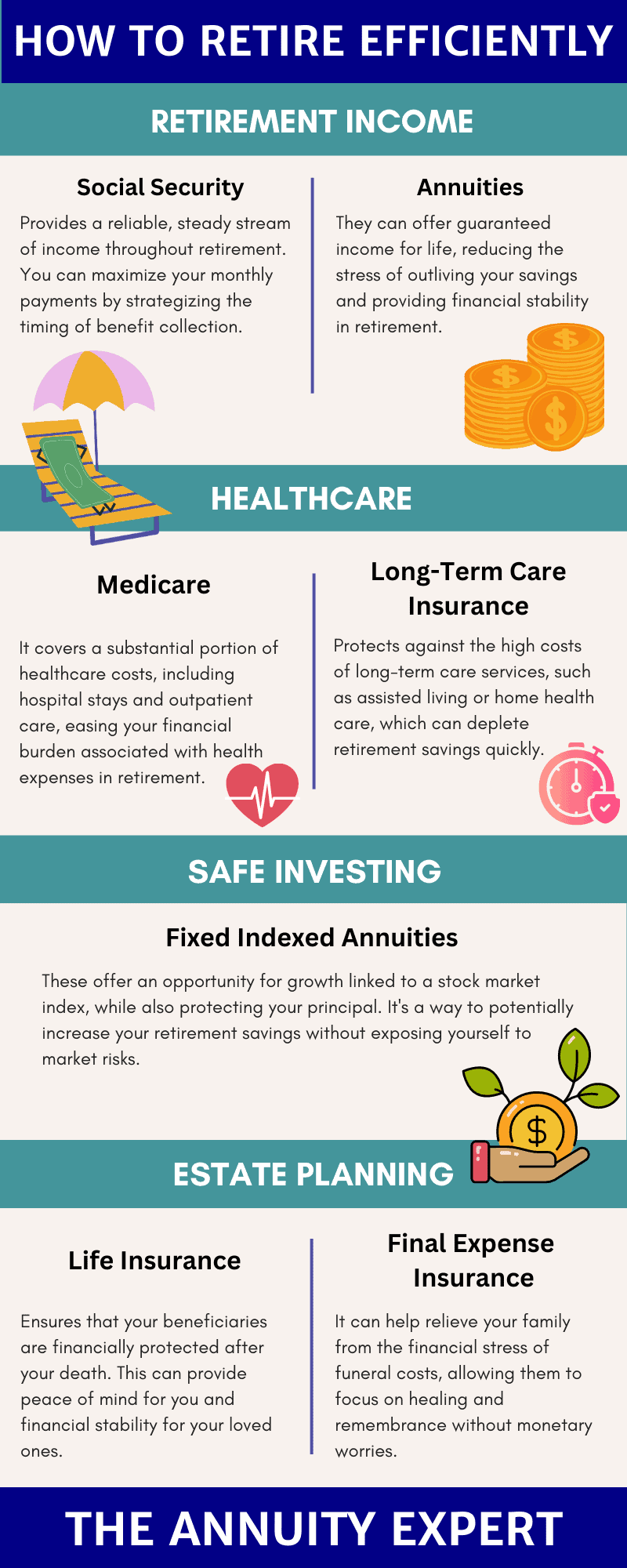
- Annuities: For guaranteed lifetime income, peace of mind, and a secure financial future.
- Traditional or Roth IRA: Good for self-employed or employees without a workplace plan.
- SEP IRA or Solo 401(k): Best for self-employed individuals.
Final Thoughts
A 401(k) is a strong foundation, but it’s not the full plan. To build complete retirement security, many people combine 401(k)s with annuities, IRAs, and insurance. Contact The Annuity Expert for free quotes to compare annuities, life, and long-term care insurance to protect your retirement savings.
Take the first step towards a worry-free retirement. Contact us today for free advice or a personalized 401(k) quote.
Book A Free Consultation
Get help from a licensed financial professional. This service is free of charge.
Let Us Answer Your Questions
Not quite ready for a meeting, but you have a question that needs answering? We’re happy to help. Leave an inquiry below, and one of our staff will respond via email.
Questions From Our Readers
Can I contribute 100% of my salary to my 401(k)?
In 2026, the maximum contribution for employees under 50 is $24,500. If you’re 50 or older, you can make a catch-up contribution of up to $8,000 for a total potential contribution of $32,500. If you are aged 60-63, the catch-up contribution is $11,250 for a total contribution of $43,750.
How much can a 401(k) earn?
While individual returns may vary, historical stock market returns have averaged around 7% annually after inflation. Consistently contributing and taking advantage of employer matches can maximize the growth potential of your 401(k).
Can I lose money in 401(k)?
Yes, your 401(k) can lose money because it typically invests in stocks, bonds, and other securities, which can fluctuate in value. While markets generally grow over time, short-term losses can occur due to market volatility. It’s important to choose a diversified investment mix aligned with your risk tolerance and retirement timeline to manage potential risks effectively.
What are some alternatives to a 401(k)?
Some popular alternative retirement accounts are IRAs, pensions, deferred annuities, and index universal life insurance.
Does employer match count toward the 401(k) limit?
Employer matching contributions do not count toward your individual 401(k) contribution limit. However, they do count toward the overall limit for total contributions to your 401(k) plan, which includes your contributions, employer matches, and other employer contributions. For 2025, the total contribution limit is $70,000.
What percentage should I contribute to my 401(k) per paycheck?
Aim for at least enough to get your full employer match, then increase contributions over time toward 15% of income.
What is the average match of a 401(k) by an employer?
The average 401(k) match by employers is typically around 3% to 6% of an employee’s salary, with many employers matching up to 50% to 100% of employee contributions up to that limit.
What is the difference between a 401(k) and 401(a)?
401(a): Employer-driven, typically for government and nonprofit employees, mandatory contributions.
401(k): Employee-driven, more flexible contribution options.
What do you think about embedding annuities in 401(k) plans to help guarantee a lifelong retirement income?
Embedding annuities in 401(k) plans is a smart move for those seeking guaranteed lifetime income. It creates a pension-like stream that helps retirees avoid outliving their savings. With a guaranteed lifetime withdrawal benefit (GLWB), participants can turn part of their 401(k) into predictable income without giving up control or leaving money on the table for heirs. However, not all annuities in plans offer flexible features, and fees may vary. It’s best for those nearing retirement who want income certainty—not ideal for younger workers needing liquidity or higher growth.
How much does a 401(k) grow per year?
Growth depends on contributions, market performance, and investment mix. Historically, balanced portfolios return 5–8% annually.
Does a 401(k) double every 7 years?
It depends on returns. At ~10% average growth, the “Rule of 72” suggests doubling every 7 years. Actual results vary.
Can I cash out my 401(k) if I get fired?
Yes, but penalties and taxes apply before age 59½. A rollover into an IRA or new employer plan avoids penalties.
What happens to my 401(k) if I quit?
You can leave it, roll it into a new plan or IRA, or cash it out (penalties may apply).
What is a large-plan 401(k)?
Plans with 100+ eligible participants. These often require independent audits.
What’s the benefit of moving 401(k) money into an annuity?
A 401(k) is designed for saving and growing money, but it doesn’t guarantee income. An annuity can convert your balance into lifetime income, helping ensure you never outlive your savings.