

What Makes TIAA Unique
1. TIAA’s Real Business Is Annuities, Not Life Insurance
TIAA no longer sells new life insurance policies. This matters because most insurance companies diversify across multiple risk pools. TIAA specializes in guaranteed income solutions through annuities, primarily serving institutions like universities and hospitals. Their most recognized product is the TIAA Traditional annuity, which includes guaranteed minimum interest and optional lifetime income.
2. Financial Strength Ratings Among the Best in the Industry
Each rating should be verified with the rating agency or current carrier disclosure and displayed with an as-of date; ratings apply to the rated insurer, not variable accounts.
This makes them a strong option for conservative annuity buyers concerned about long-term guarantees.
3. Institutional Focus, Not Built for Individual Shoppers
TIAA was built to serve 403(b) and 401(a) plans for universities and hospitals. They aren’t focused on retail customers. While they offer excellent stability, their customer service and technology are not designed for individuals shopping online for life insurance or annuities.
Is the TIAA-CREF Annuity a Good Choice?
What Is the TIAA-CREF Annuity?
TIAA (Teachers Insurance and Annuity Association) and CREF (College Retirement Equities Fund) offer both fixed annuities and variable annuities targeted primarily to educators and nonprofit employees. Their flagship products include:
- TIAA Traditional: A fixed annuity that guarantees principal and pays a minimum interest rate, with the potential for additional interest credited based on TIAA’s declared rates.
- CREF Variable Annuities: Market-based investments that offer variable returns and variable income, including options tied to equities, bonds, and real estate accounts.
How Each Annuity Type Works and Why It Matters
TIAA Traditional – Fixed Annuity
How it works: Contributions grow tax-deferred at a guaranteed minimum rate. TIAA may declare additional interest above the guaranteed rate, especially during strong investment years. At retirement, income is usually provided through annuitization.
Why it’s unique: TIAA shares earnings with contract holders. Interest rates are backed by TIAA’s general account, which is highly rated.
Pros:
- Guaranteed principal and minimum interest
- Strong financial ratings
- No annual fees
- Potential for additional credited interest
Cons:
- Requires annuitization for income
- Limited liquidity and transfer options
- Interest rate varies by contract and issue year
- Fixed payments don’t protect against inflation
CREF Variable Annuities
How it works: Assets are invested in one or more variable accounts, such as U.S. equity, global equity, fixed income, and real estate. Income fluctuates based on investment performance.
Why it’s unique: Low fees compared to retail variable annuities, wide access to diverse asset classes, and often used within employer-sponsored 403(b) and 401(a) plans.
Pros:
- Higher long-term growth potential
- Income can increase with investment performance
- Diversified investment options
- Low internal costs relative to retail variable annuities
Cons:
- Investment losses can reduce account value and income
- Requires risk tolerance
- No guaranteed income unless you annuitize
- Still relies on TIAA’s investment management for performance
Who Needs These Annuities—and Who Should Look Elsewhere?
Who needs TIAA Traditional or CREF?
- Educators, nonprofit, hospital, or government workers eligible for TIAA plans
- Individuals seeking guaranteed income through annuitization
- People comfortable with limited access to funds in exchange for lifetime income
- Those looking to diversify retirement income sources with a mix of fixed and market-based income
Who doesn’t need it?
- Anyone unwilling to annuitize and give up control of their funds
- Individuals who want inflation protection without taking investment risk
- People who prefer flexible access or modern GLWB income riders instead of irrevocable annuitization
- Investors who prioritize liquidity, access to traditional stock indexes, or fixed indexed annuities with more flexibility
What Happens After the Surrender Period?
TIAA Traditional typically has restrictions on lump-sum withdrawals even after the surrender period ends. Many contracts require annuitization or allow access only through a multiyear payout structure (e.g., 10-year installments). This is a major limitation compared to modern deferred annuities that offer full liquidity after the term.
Other Insurance or Annuities That Could Be Better
If you’re not required to use TIAA, or if you’re considering rollover options:
- Fixed Indexed Annuities (FIAs): Offer market-linked growth potential with no downside risk and optional guaranteed lifetime income via GLWBs—no annuitization required. They offer traditional indexes like the S&P 500 and real estate indexes with transparent crediting methods.
- Multi-Year Guaranteed Annuities (MYGAs): Provide guaranteed fixed interest for a specific term, then allow full access to principal and earnings without requiring annuitization.
- Deferred Income Annuities (DIAs): Build future income but come with inflexibility and the risk of lost premiums if canceled early. These are rarely better than FIAs with GLWB riders.
- Immediate Annuities (SPIAs): Better for early retirees using non-qualified funds who need income before age 59½ without IRS penalties. For everyone else, GLWBs are typically more flexible and secure.
Can You Fund a TIAA Annuity With Your Own Money?
Only if you’re already affiliated with an institution that offers TIAA. Most TIAA products are funded through:
- 403(b), 401(a), or 457(b) plans
- IRA rollovers from qualified retirement plans
- Employer contributions
They do not offer individual annuity sales directly to the public like most carriers.
Compare Before You Commit
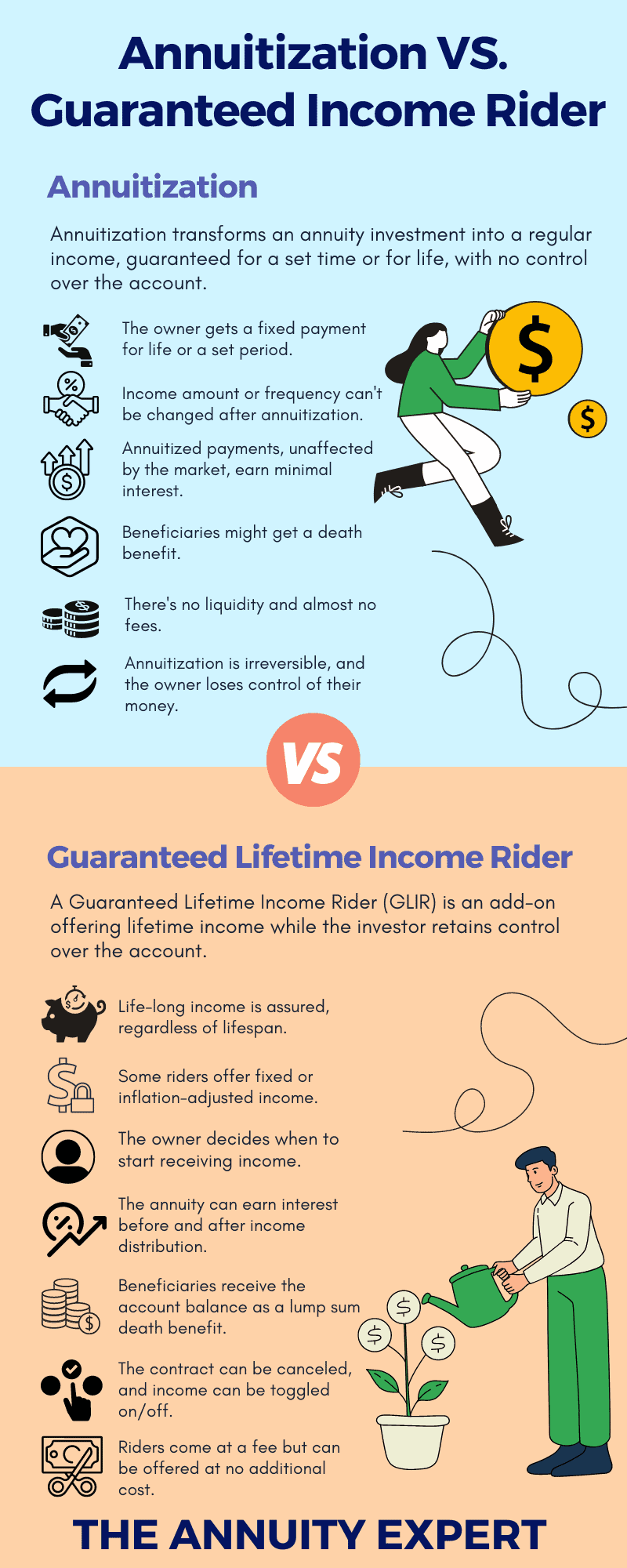
Never buy an annuity just because it’s available through your employer. Most TIAA contracts require irreversible annuitization and don’t include optional income riders. You owe it to yourself to compare annuity products before locking in your retirement future.
Should You Buy a TIAA-CREF Annuity?
TIAA Traditional offers solid guarantees, but only if you are comfortable annuitizing—which means giving up control and access to your money. Their CREF annuities provide market growth but with no income guarantees unless annuitized.
TIAA annuities may be worth keeping if you already own them within a 403(b) or pension-like structure. But if you’re deciding where to place new money—or evaluating retirement income strategies—you can often get better income guarantees, liquidity, and flexibility from a fixed indexed annuity with a GLWB.
Contact The Annuity Expert for a free quote and side-by-side comparison. We’ll help you evaluate TIAA against newer, more flexible annuity options so you can make the best financial decision with confidence.
Book A Free Consultation
Get help from a licensed financial professional. This service is free of charge.
Let Us Answer Your Questions
Not quite ready for a meeting, but you have a question that needs answering? We’re happy to help. Leave an inquiry below, and one of our staff will respond via email.
Questions From Our Readers
Should my friend roll over an old TIAA-CREF Traditional Fixed Annuity into an IRA and use a 3-fund retirement portfolio instead?
It depends on her goals, risk tolerance, and how much she values guarantees. The TIAA Traditional Fixed Annuity offers a guaranteed 3% interest rate and has averaged around 4.5% compounded historically. That’s strong for a no-fee, principal-protected product. But the downside is liquidity—most TIAA annuities require payout over 10 years, annuitization, or other restricted options.
If she wants flexibility and growth potential, rolling over the funds into an IRA and building a 3-fund portfolio is a solid strategy. It would provide market exposure and diversification, ideal for someone with a 15-year retirement horizon and moderate risk tolerance.
Alternatively, she should consider moving the funds into a multi-year guaranteed annuity (MYGA) with a higher fixed rate than TIAA currently offers or into a fixed indexed annuity (FIA) with a guaranteed lifetime withdrawal benefit (GLWB). A MYGA would preserve the guaranteed interest but offer better rates and full access at the end of the term. An FIA with a GLWB could contractually guarantee her future retirement income today, regardless of interest rate changes, while still protecting the principal and offering upside potential.
Unlike annuitization, which is affected by interest rate environments and can’t be locked in now, a GLWB gives more control and legacy protection. If her focus is income later and asset protection now, the FIA with a GLWB offers the best balance between guarantees and flexibility. Always confirm if there are any restrictions or penalties before transferring the TIAA funds.
Why did my TIAA lifetime annuity estimate suddenly increase by 3.5x, and is this a bait-and-switch?
IAA likely updated its calculation assumptions on the back end—perhaps showing a single-life payout instead of a joint-life with refund, or using updated mortality and interest rate tables. This can dramatically increase the displayed income estimate, especially for older retirees. But these estimates aren’t guaranteed and can change again if interest rates drop or mortality projections shift.
You’re right to question the timing and the lack of transparency. These estimates are marketing tools, not binding offers. To get the real payout, you’d need to request a formal quote based on your chosen annuitization structure and current rates.
If you want income but don’t want to risk locking into something irrevocable, a Fixed Indexed Annuity (FIA) with a Guaranteed Lifetime Withdrawal Benefit (GLWB) is worth considering. It contractually guarantees your future income, regardless of how interest rates change in the future. That’s a major advantage over annuitization, where your income is permanently tied to the current rate environment.
A GLWB also keeps the money in your name, provides liquidity, and pays a death benefit to heirs. This option protects your income plan while offering more flexibility and legacy protection than traditional annuitization.
Use a GLWB if you want guaranteed income that won’t fluctuate or vanish due to market conditions or shifting assumptions, and avoid being locked into a decision you can’t reverse.