

The Annuity Purchase Rate Explained
The annuity purchase rate is a crucial factor in understanding how annuities work. This rate determines the amount of regular income you will receive from the annuity in exchange for your initial investment. The higher the annuity purchase rate, the more income you will get from your investment. This rate is influenced by several factors, including the type of annuity, your age and health, current market interest rates, and the term of the annuity.
Determining the Purchase Price in an Annuity
The purchase price of an annuity is the amount of money you pay to an insurance company to buy an annuity contract. This can be a lump-sum payment or a series of payments over time. The purchase price is directly proportional to the income stream the annuity provides – the more you invest, the greater the payments you will receive. A steady income for your retirement years with the right annuity.
How to Calculate the Annuity Purchase Rate
Calculating the annuity purchase rate may seem intimidating, but it becomes straightforward once you understand the basic principle. It involves the following steps:
- Determine the annual income you will receive from the annuity.
- Determine the purchase price of the annuity.
- Divide the annual income by the purchase price and multiply by 100 to get the annuity purchase rate as a percentage.
For example, if you receive $5,000 annually from an annuity for which you paid $100,000, the annuity purchase rate is ($5,000 / $100,000) * 100 = 5%.
Why It Matters and How It Works
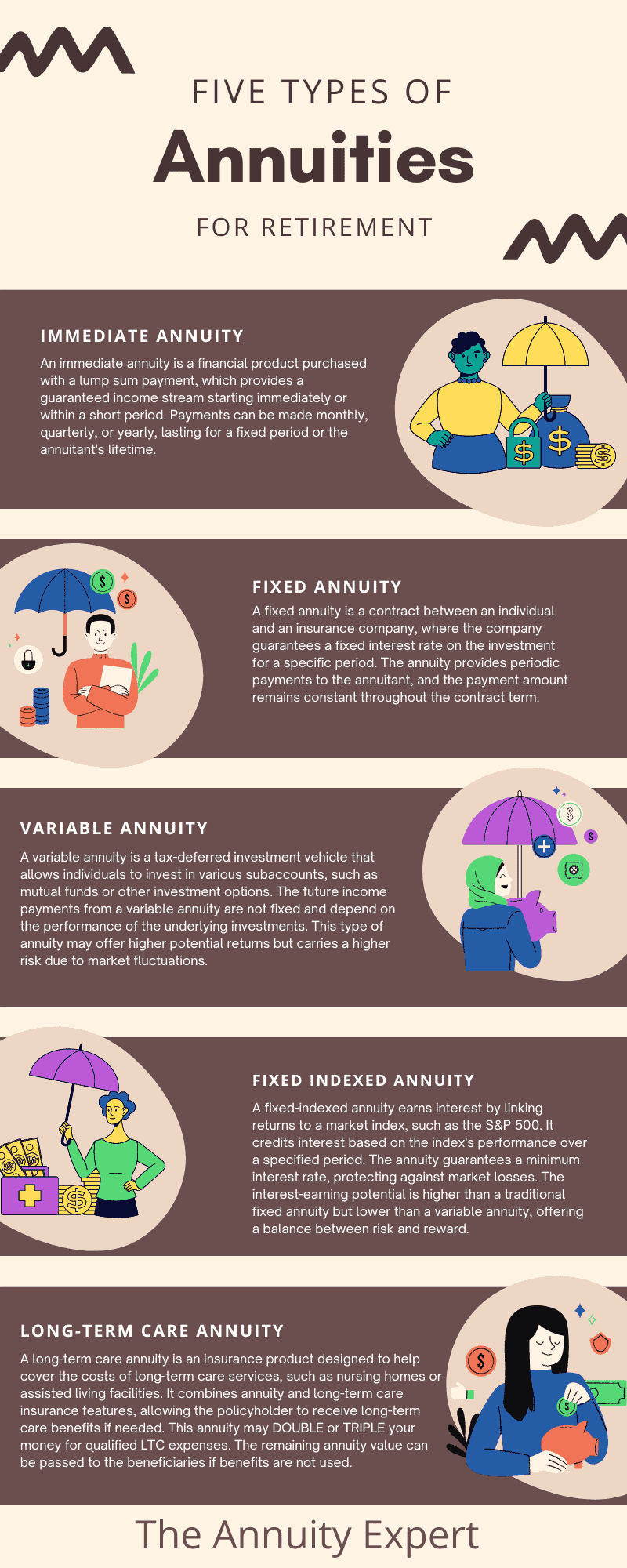
The annuity purchase rate is used to calculate how much income you’ll receive from a single premium immediate annuity (SPIA) or a deferred income annuity (DIA). It reflects several factors:
- Your age
- Your gender
- The annuity type (life-only, period certain, joint, etc.)
- The deferral period
- The interest rate environment
- The health underwriting (if applicable)
You can think of it like this:
Annual Income = Purchase Rate × Premium / 1,000
For example, if your annuity purchase rate is $65 per $1,000 and you invest $500,000, your annual income would be:
$65 × 500 = $32,500 per year
Unique Features of Different Annuities
| Type of Annuity | How It Uses Purchase Rate | What Makes It Unique |
|---|---|---|
| SPIA | Income starts immediately | Simplest to calculate; highest payout |
| DIA | Income starts later | Higher future income; grows with delay |
| Fixed Indexed Annuity MYGA or FIA | Uses income base, not account value | Income % depends on age & deferral years |
| QLAC (Qualified Longevity Annuity Contract) | Deferred income from IRA | Tax deferral beyond age 73; caps apply |
Bottom Line
The annuity purchase rate is the single most important factor when determining how much guaranteed income your money can buy. It reflects your age, timing, and product type. Comparing rates across companies and annuity types is critical—but so is timing your income to start wisely.
Book A Free Consultation
Get help from a licensed financial professional. This service is free of charge.
Let Us Answer Your Questions
Not quite ready for a meeting, but you have a question that needs answering? We’re happy to help. Leave an inquiry below, and one of our staff will respond via email.
What is a reasonable Annuity Purchase Rate?
Your best Annuity Purchase Rate will depend on your goals and financial circumstances. Generally, the higher the rate offered by an insurance company, the more attractive it is.
If I invest more in an annuity, will my annual payments be higher?
Yes. By investing more in an annuity, you can typically increase the amount of your annual payments. This is because most annuities offer a guaranteed return or rate of growth on your money over time.
Are Annuities Taxable income?
Annuity income is generally taxable, including payments from pre-tax IRAs and 401(k)s. Nonqualified payments include taxable earnings and recovery of after-tax principal; qualified Roth distributions can be tax-free.
Is there a maximum amount I can invest in an annuity?
The maximum amount you can invest in an annuity depends on the type of annuity you purchase and the company offering it. Since there are many different types of annuities, speak to a financial advisor or insurance provider to learn more about the specific limits associated with your chosen annuity.