

Understanding How Annuities Benefit Your Retirement
Retirement Income
If you are generally wondering are annuities a good investment for your portfolio, the answer depends entirely on your strategy. For many baby boomers, annuities can be an excellent way to supplement your retirement income. Focusing on annuities offering the highest monthly payments can ensure a steady and reliable income stream. Avoid getting distracted by unnecessary features and concentrate on the paycheck you’ll receive. Addressing inflation is also crucial to maintaining your purchasing power over time.
Long-Term Care Expenses
Planning for these expenses is vital, as there is a 70% chance of needing long-term care (LTC) in your lifetime. Utilizing a long-term care annuity can help you cover these costs without draining your savings. This option allows you to pay for LTC at a fraction of the cost, ensuring financial stability during your later years.
Control and Flexibility
Maintaining control over your finances is essential, especially in retirement. Avoid annuities that require you to give up control to the insurance company, such as immediate annuities. Keeping your money accessible ensures you can handle unexpected expenses or emergencies.
Liquidity
It’s crucial not to tie up all your money in an annuity. Keep at least five months’ worth of living expenses liquid to ensure you have access to funds in case of emergencies. This financial buffer provides peace of mind and flexibility.
Risk Management
If you can’t afford to lose money, avoid risking your savings. Fixed index annuities offer a safer alternative, allowing you to benefit from stock market performance without the risk of losing your principal. This strategy balances growth potential with financial security.
Cost Efficiency
Be mindful of high fees associated with some annuities, such as variable annuities. Shopping around and comparing products can help you find a better deal at a lower cost. Reducing fees maximizes your returns and ensures more of your money works for you.

Annuity Basics Nobody’s Telling Boomers
1. Required Minimum Distribution (RMD) at Age 73
What’s changed: Under SECURE 2.0, the RMD starting age is now 73 for people born from 1951 through 1959. For those born in 1960 or later, RMDs begin at age 75. Your first RMD is generally due by April 1 of the year after you reach your RMD age.
Why it matters: If you delay that first RMD, you may need to take two distributions in one year, which could increase taxes, affect Social Security taxation, or trigger Medicare IRMAA surcharges.
As you are reviewing annuity do’s and don’ts for baby boomers, baby-boomer retirement income options can help coordinate retirement income with RMDs, inflation, future care costs, and legacy goals as retirement gets closer.
2. IRMAA Traps (Medicare Surcharge on High Income)
How annuities can bite you: Medicare uses your income from two years ago to calculate premiums. Large IRA withdrawals or annuity income in one year can trigger higher premiums later.
Strategy: Consider Roth conversions, spreading withdrawals across years, or using a Qualified Longevity Annuity Contract (QLAC) to reduce taxable RMDs and help control income.
3. Social Security Tax Interactions
Bottom line: Annuity payouts aren’t considered “earnings” for benefit reduction, but they do count as income in the IRS provisional-income formula. That means they can increase how much of your Social Security becomes taxable. If you are wondering are all annuities tax deferred, the short answer is yes for growth, but how they are taxed upon withdrawal depends entirely on whether you used qualified (pre-tax) or non-qualified funds.
4. Survivor Income Planning
The perk: Joint-and-survivor annuities provide income for as long as either spouse lives—and can include a guarantee period protecting beneficiaries.
Watch out: They reduce payouts compared to single-life options. Plus, committing to annuitization means less flexibility for your estate later. Pairing single-life income with life insurance or leaving a larger cash reserve can sometimes be more efficient.
5. New “Don’ts”: Engineered Indexes & Annuitization Lock-In
Engineered Indexed Annuities (EIAs): These can seem like a safe middle ground—but:
- They are often complex, with caps, participation rates, and spreads that undercut growth potential.
- They are hard to understand or compare, and may lock you into poor terms.
- Transparency is limited—making them risky for many retirees.
Annuitization Lock-In: Once you convert a lump sum into annuity payments, it’s permanent. You lose liquidity, flexibility, and access. Unless you’re certain you’ll never need the principal, this can be a costly mistake.
Final Thoughts
Annuity planning for today’s boomers isn’t about finding the perfect contract—it’s about avoiding traps and coordinating income, taxes, and flexibility:
- Be alert to RMD timing shifts (age 73) and plan distributions accordingly.
- Watch out for IRMAA surcharges, Social Security tax traps, and inflated Medicare premiums.
- Design survivor income with flexibility—don’t give up control unnecessarily.
- Steer clear of overly complex indexes and permanent annuitization unless you’re fully comfortable with the trade-offs.
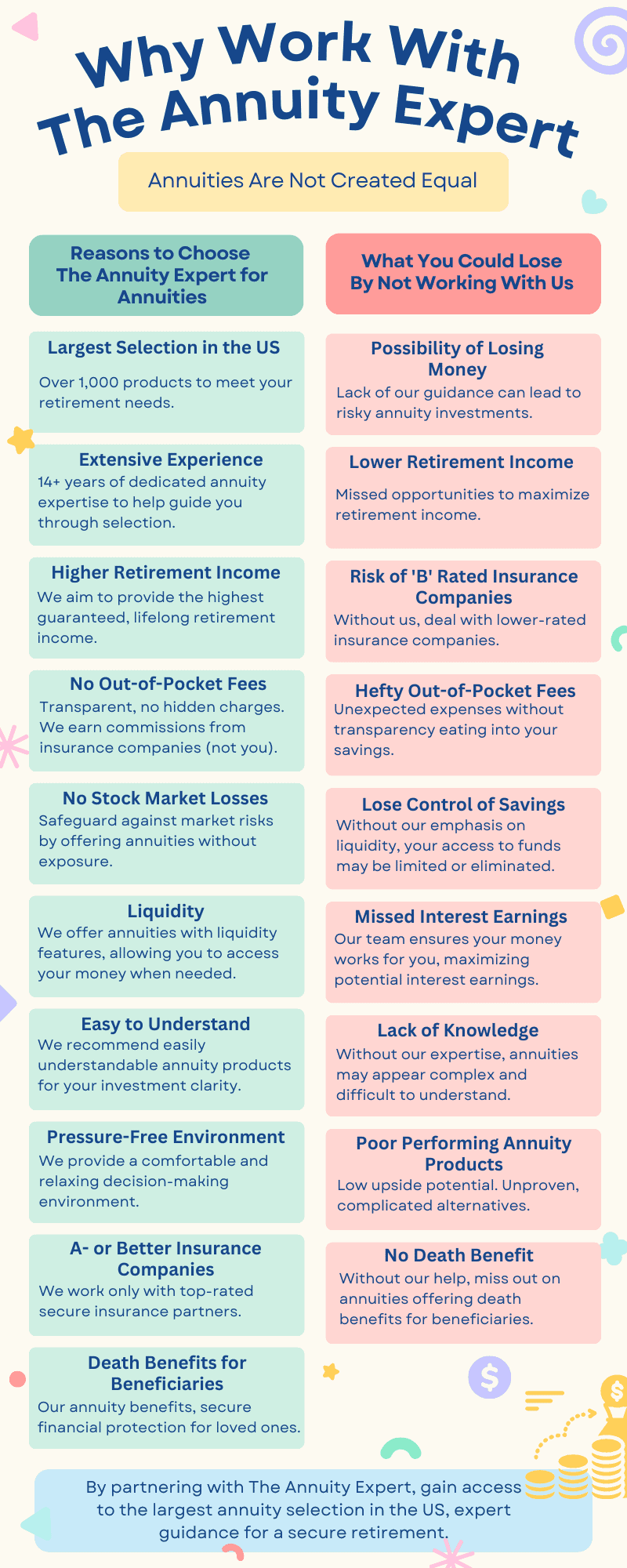
If you’re unsure which annuity type or strategy fits your needs, contact The Annuity Expert for free quotes and personal guidance. We’ll help you compare options, save money, and protect your retirement income.
Book A Free Consultation
Get help from a licensed financial professional. This service is free of charge.
Let Us Answer Your Questions
Not quite ready for a meeting, but you have a question that needs answering? We’re happy to help. Leave an inquiry below, and one of our staff will respond via email.
What is an annuity account?
An annuity account is a financial product from insurance companies for saving for retirement and receiving regular payments later. Contributions can be made in a lump sum or multiple payments, growing tax-deferred until withdrawal. At a certain age, payments begin, lasting for life or a set period. Annuities offer a steady retirement income, enhancing financial security and managing the risk of outliving savings.
What is a good annuity rate?
A good annuity rate depends on the economy, the annuity type, and contract terms. If you want to see exactly what the market is paying today, you can check our master table of current fixed annuity rates. Generally, a rate slightly above comparable Treasury yields is competitive. It’s crucial to compare yields across providers and consider the insurer’s financial stability alongside the contract features.