

What You’ll Get
At The Annuity Expert, we’re an independent annuity broker. This guide shows you exactly which annuity types fit common retirement goals—income you can’t outlive, principal protection, tax timing, and long-term care—plus when each works, when it doesn’t, and how to compare live quotes so you avoid costly mistakes. Helpful Tip: If you are looking for a broader overview across all age groups and product classes, see our complete master guide on the best annuities currently available on the market.
Compare The Best Annuity Types For Retirement (Who Benefits & Who Doesn’t)
| Annuity Type | Best For | Not Ideal For | Upside Potential | Fees/Riders | Common Mistakes |
|---|---|---|---|---|---|
| Fixed Index Annuity (FIA) + GLWB | Lifetime paycheck with market-linked growth potential and principal protection | Those needing full liquidity or uncapped equity-style upside | Rules-based index crediting (not full market) | GLWB rider charge may apply | Confusing income base vs. account value; turning income on too early |
| SPIA (Immediate Annuity) | Highest income per dollar for near-term retirement needs | People who want long deferral or estate control | None (fixed) | No rider fee; pricing baked into payout | Choosing a life only payout option without survivor needs considered |
| DIA / QLAC | Future income at a target age to reduce sequence risk and help with RMD planning | Those needing income now or maximum flexibility | None (fixed) | No rider fee | Waiting too long to fund; not matching the start date to the real expenses |
| MYGA (Multi-Year Guaranteed Annuity) | Safe, CD-like yields and cash-flow timing (laddering) | Those seeking lifetime income guarantees | Fixed rate | No rider fee | Buying one long-term instead of a ladder |
| LTC Annuity (Annuity With LTC Benefits) | Leveraging dollars for care costs while preserving income options | Those with minimal health history | Fixed or indexed, depending on the product | Rider charges may apply | Treating as growth only and ignoring care triggers |
Quick guidance: If you want a pension-like, flexible paycheck, compare FIA + GLWB vs SPIA. If tax/RMD timing is the pain point, consider a QLAC. If you need safe yield and cash-flow control, build a MYGA ladder. If healthcare risk keeps you up at night, consider an LTC annuity or life insurance with an LTC rider.
Choosing the Best Annuity: How Guarantees Change Investor Behavior
Solution A: Fixed Index Annuity (FIA) With GLWB
How it works: Your principal is protected; growth credits follow an index method. The GLWB rider creates a lifetime paycheck you can turn on later, often with optional spousal benefits.
Pros
- Guaranteed lifetime income without giving up ownership
- Principal protection and rules-based growth
- Optional joint/survivor features for spouses
Cons
- Rider fee may apply
- Liquidity limits during the surrender period
- Not full market upside
Who benefits
- Retirees who want a baseline paycheck that won’t run out
- Couples prioritizing survivor income
- Investors who value downside protection
Who might not benefit
- Short time horizons or those needing full liquidity
- Investors seeking uncapped equity returns
Money-saving tips
- Compare GLWB roll-up and payout factors across carriers, not just teaser rates
- Choose traditional indexes with long histories over engineered blends
- Coordinate with term or guaranteed UL if you want to preserve legacy while spending income
Solution B: Single Premium Immediate Annuity (SPIA)
How it works: Convert a lump sum to a paycheck that starts now.
Pros
- Highest income per dollar for immediate needs
- Simple and predictable
Cons
- Irreversible; no account value
- Limited inflation protection unless you add features
Who benefits
- Retirees who need income now and value simplicity
- People with long life expectancy who want the maximum monthly payout
Who might not benefit
- Those who want flexibility or liquidity
- Savers preferring market-linked upside
Money-saving tips
- Compare period-certain or cash-refund options to protect heirs
- Use SPIA for essential bills, keep discretionary spending flexible elsewhere
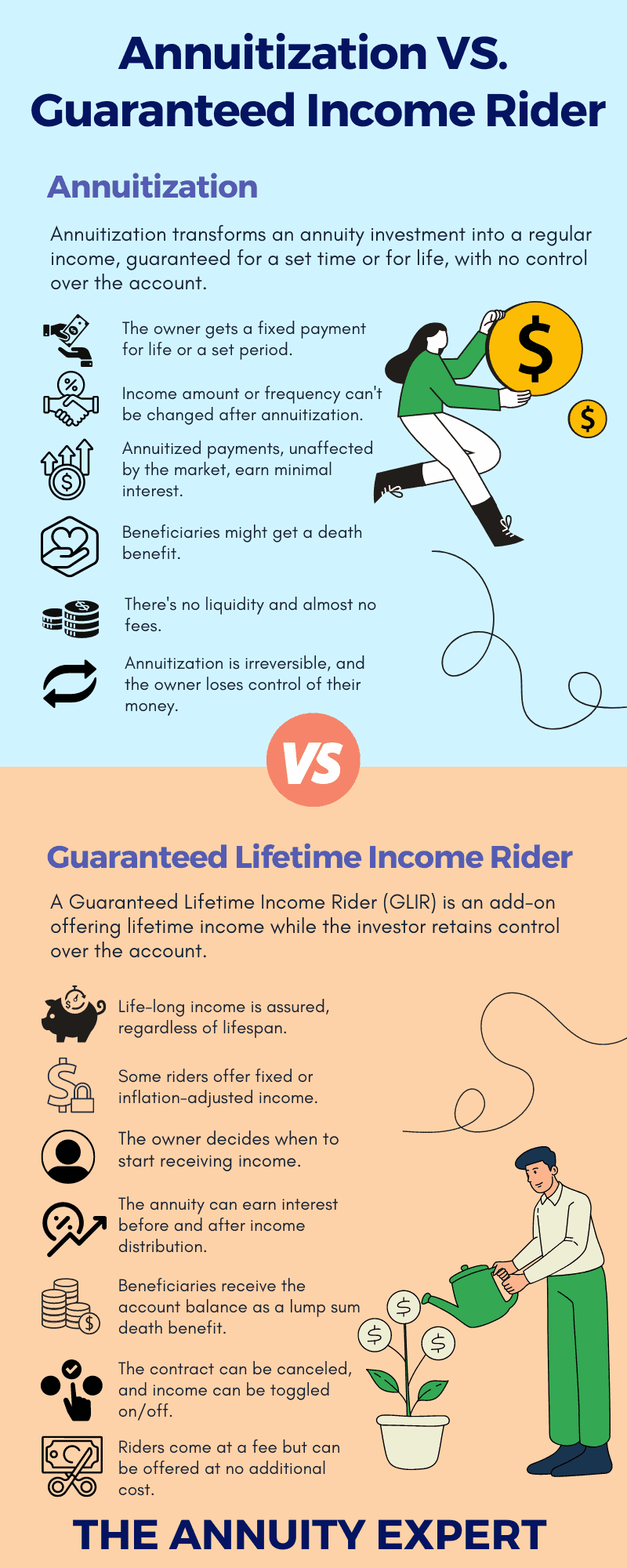
Solution C: DIA / QLAC (Deferred Income With RMD Help)
How it works: Buy income today that begins later (often 75–85). QLACs let you use qualified funds and can reduce RMDs on the amount placed.
Pros
- Future paycheck that shores up late-life expenses
- Helps manage RMDs/IRMAA peaks with better income timing
Cons
- Irreversible; no account value
- No market-linked upside
Who benefits
- High IRA balances seeking tax-timing control
- People planning for late-life longevity/healthcare costs
Who might not benefit
- Those needing near-term income or full flexibility
Money-saving tips
- Pair QLAC funding with staged Roth conversions in your 60s
- Set the income start age to match real expenses (Medicare surcharges, mortgage payoff, etc.)
Solution D: MYGA Ladder (CD-Like Guarantees)
How it works: Buy multiple MYGAs with staggered maturities (e.g., 3/4/5 years) to lock in rates and schedule cash flow.
Pros
- Simple, guaranteed rates with tax-deferral
- Built-in liquidity windows as each rung matures
Cons
- Limited free withdrawals during the terms
- No lifetime income without adding another solution
Who benefits
- Savers who want bond/cash alternatives
- Retirees planning Roth conversions or big expenses over 3–7 years
Who might not benefit
- Those wanting a guaranteed lifetime paycheck
Money-saving tips
- Ladder across terms and carriers to reduce reinvestment risk
- Use maturing rungs to pre-pay taxes on planned Roth conversions in lower-income years
Solution E: Annuities For Long-Term Care
How it works: Specialized annuities or riders multiply benefits for qualified LTC needs, often with favorable tax treatment.
Pros
- Leverage dollars for care
- May preserve income options if care is never needed
Cons
- Underwriting and rider charges may apply
- Benefits and triggers vary by contract
Who benefits
- Households with a family history of care needs
- Retirees who want one product to address income and care risk
Who might not benefit
- Those who already have robust LTC coverage
- People with very limited budgets (consider alternatives)
Other coverage that may help
- Traditional LTC insurance, if you want standalone, richer LTC pools
- Life insurance with an LTC rider for a stronger legacy, plus care flexibility
Real-World Retirement Scenarios
Age 62, retiring early with $800k, anxious about markets
- Use FIA + GLWB to start income at 67 for baseline bills
- Build a MYGA ladder for years 1–5 cash flow
- Add level-term life if you want to preserve legacy while spending income
Age 68, a couple with large IRAs and tax concerns
- Fund a QLAC to push part of RMDs into later years
- Use MYGA interest to cover Roth conversion taxes in the 60s
- Add joint GLWB for survivor income
Age 70, solo retiree with Alzheimer’s family history
- Consider an LTC annuity for care leverage
- Add a small SPIA for immediate, predictable income
- Keep a short MYGA rung for known expenses
Who Shouldn’t Use Annuities
- You need full liquidity in the next few years
- You want uncapped equity-style upside
- You already have ample pension income and prefer market flexibility
- You’re likely to move money frequently or can’t commit to a term
How We Compare Quotes (So You Get A Better Deal)
- Clarify your goal: lifetime income, safety, tax timing, or care
- Shop multiple carriers: GLWB payout factors, MYGA yields, SPIA/DIA quotes, QLAC options
- Implement and review: coordinate with taxes, Medicare, and estate goals; adjust annually
Ready to compare options and see exactly what fits your goals? Call 770-755-1565 or request free quotes and a personalized plan. As an independent annuity broker, we’ll shop multiple carriers, explain your tradeoffs in plain terms, and help you implement a solution that protects your income, taxes, and legacy.
Book A Free Consultation
Get help from a licensed financial professional. This service is free of charge.
Let Us Answer Your Questions
Not quite ready for a meeting, but you have a question that needs answering? We’re happy to help. Leave an inquiry below, and one of our staff will respond via email.