

What You’re Really Asking
A 401(k) and a pension both aim to fund retirement, but they work completely differently. A 401(k) is a defined contribution plan, meaning you’re responsible for contributing, investing, and managing your own money. A pension, on the other hand, is a defined benefit plan, where your employer promises a set monthly income for life based on years of service and salary.
In plain terms, a 401(k) gives you a pot of money to manage. A pension gives you a paycheck for life. The difference determines who carries the risk — you or your employer.
How Each Plan Works (And Why It’s Unique)
- 401(k): You and sometimes your employer contribute to an investment account, typically invested in mutual funds. You decide how much risk to take. When you retire, your account’s value determines how much you can withdraw. There’s no built-in guarantee you won’t outlive your savings.
- Pension: Your employer funds it and promises a specific monthly payment when you retire, often based on your years of service and final salary. You don’t have to manage investments or worry about running out of money; the employer carries that responsibility.
- Why It Matters: The 401(k) shifted the responsibility for retirement from companies to individuals. While a pension guarantees stability, a 401(k) requires careful planning. If you want the same security as a pension, you’ll need to convert part of your 401(k) into a guaranteed income stream — usually through an annuity.
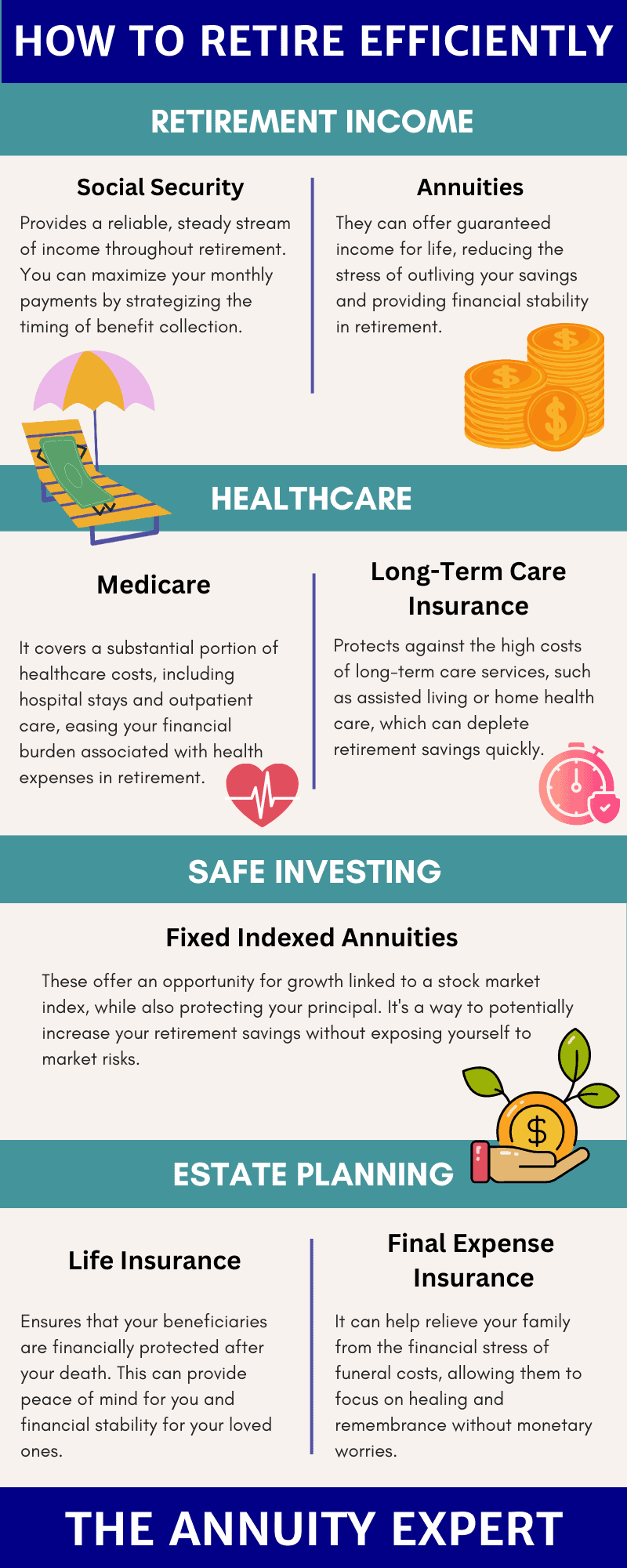
Every Way to Create Pension-Style Income From a 401(k)
1. Fixed Indexed Annuity (FIA) With a Guaranteed Lifetime Withdrawal Benefit (GLWB)
- How it works: Roll over your 401(k) to a fixed indexed annuity and add a GLWB rider. This rider guarantees income for life while your account continues to earn interest based on index performance (such as the S&P 500) without losing principal.
- Example: If you retire with $500,000, you can turn it into a predictable monthly income that lasts as long as you live — even if your account balance runs out.
- Pros: Lifetime income, market loss protection, flexible start date, and death benefit for beneficiaries.
- Cons: Limited liquidity during the surrender period and possible rider fees.
- Best for: Retirees seeking a predictable income with some growth potential.
- Not for: Those who want complete liquidity or aggressive stock exposure.
2. Single Premium Immediate Annuity (SPIA)
- How it works: You give the insurer a lump sum and start receiving income immediately — like a paycheck.
- Example: A $300,000 SPIA might pay you a monthly income starting in 30 days and continue for life.
- Pros: Simple, no ongoing fees, high lifetime payout rate.
- Cons: Irreversible and limited flexibility once payments start.
- Best for: Those retiring now who need a dependable income.
- Not for: Those who need access to their full savings.
3. Deferred Income Annuity (DIA) or Qualified Longevity Annuity Contract (QLAC)
- How it works: You buy the annuity today, but income begins years later (for example, at age 75 or 80). A QLAC allows you to defer required minimum distributions (RMDs) on the portion invested.
- Example: A 60-year-old invests $100,000 and starts receiving income at 80 to cover late-life expenses.
- Pros: Long-term income security and tax benefits for IRAs.
- Cons: Illiquid and delayed income.
- Best for: People with long life expectancies or those planning for later retirement stages.
- Not for: Those who need immediate or flexible access.
4. In-Plan Annuity Options
- How it works: Some 401(k)s include an annuity within the plan, allowing you to buy lifetime income directly through your account.
- Pros: Convenience and lower costs through institutional pricing.
- Cons: Limited product selection and portability issues.
- Best for: Those who prefer a simple, built-in option.
- Not for: Savvy shoppers who want to compare better annuity features.
5. Cash Balance Plan (Defined Benefit Hybrid)
- How it works: A business owner or employer funds an account that grows with interest credits and pays a lifetime income at retirement.
- Pros: High contribution limits and predictable growth.
- Cons: Complex administration and required funding commitments.
- Best for: Small-business owners and professionals wanting large tax deductions.
- Not for: Employees without control of company plans.
6. The DIY Route: Bonds and the 4% Withdrawal Rule
- How it works: You keep your money in investments and withdraw around 4% annually.
- Pros: Liquidity and control.
- Cons: No guarantees — market downturns can quickly drain savings.
- Best for: Experienced investors.
- Not for: Those who can’t risk running out of money.
Why Annuities Beat the 4% Rule
The 4% rule relies on assumptions — not guarantees. If markets fall or you live longer than expected, your money can run out. An annuity removes that risk, ensuring your essential expenses are covered for life.

Pros and Cons of Turning a 401(k) Into a Pension
Pros:
- Contractually guaranteed lifetime income.
- Protection against market losses (for fixed and indexed annuities).
- Optional death benefits for heirs.
- Less stress and easier budgeting in retirement.
Cons:
- Limited liquidity and potential surrender charges.
- Rider fees for income guarantees.
- Less potential for market upside.
Who Needs Pension-Like Income
You need it if:
- You fear outliving your money.
- You’re retired or near retirement and want income stability.
- You don’t have a traditional pension.
- You have a spouse who depends on your retirement income.
You may not need it if:
- You already have a guaranteed income covering your expenses.
- You prefer managing investments yourself.
- You’re comfortable with market risk and potential loss.
Related Insurance That Solves Retirement Gaps
- Life Insurance: Replaces lost income for a spouse or heirs if you die early.
- Long-Term Care Insurance: Covers nursing home or home care costs that pensions and 401(k)s don’t pay for.
- Disability Insurance: Protects your paycheck if you become disabled before retirement.
- Medicare Supplement Plans: Fill coverage gaps that can drain savings.
What To Do With Your 401(k) If You Want Certainty
- Cover essentials — Use an annuity (GLWB, SPIA, or DIA) for guaranteed lifetime income.
- Keep investments for growth — Keep a portion of your savings in mutual funds or ETFs for flexibility.
- Protect your plan — Pair with life insurance for your spouse and long-term care coverage for future expenses.
How The Annuity Expert Helps
The Annuity Expert is an independent annuity and insurance brokerage. We compare top-rated companies, explain every option, and help you turn your 401(k) into a personal pension without sales pressure or hidden fees.
Contact us for free quotes and see how much guaranteed lifetime income your 401(k) could generate.
Book A Free Consultation
Get help from a licensed financial professional. This service is free of charge.
Let Us Answer Your Questions
Not quite ready for a meeting, but you have a question that needs answering? We’re happy to help. Leave an inquiry below, and one of our staff will respond via email.
Questions From Our Readers
Is it common for employees to offer both a pension plan and a 401(k)?
It’s less common for employers to offer both a pension and a 401(k) plan, as many have shifted from pensions to 401(k) plans due to lower costs and liability. However, some industries and public sector employers still offer both.
Do I need a pension and a 401(k)?
Having both a pension and a 401(k) can greatly enhance your retirement security by providing both stable income and growth potential. It’s wise to utilize both if available to you for a more robust financial future.
Can I lose my 401(k) money?
Yes. If your investments perform poorly, your balance can drop. You carry the investment risk, unlike a pension, where the employer guarantees payments.
Does the government insure 401(k)s the way it insures bank accounts?
No. 401(k)s aren’t FDIC insured. They’re protected by laws keeping them separate from employer assets, but not from market losses.
Can I get a guaranteed income without giving up control of my money?
Yes. A Fixed Indexed Annuity with a GLWB lets you receive lifetime income while keeping ownership of your contract value.
Can I move my 401(k) after I leave a job?
Yes. You can roll it over into an IRA or annuity without paying taxes immediately, maintaining tax-deferred growth.
What happens if my employer goes bankrupt?
Your 401(k) is safe because it’s held in a separate trust, not the company’s assets. However, pension benefits may be reduced if the employer defaults — though the PBGC (Pension Benefit Guaranty Corporation) offers limited protection for traditional pensions.