

PALI, Made Simple: How It Works, What It Costs, Who It Fits
Adjustable life insurance—also called flexible premium adjustable life or universal life—is a type of permanent life insurance that can be customized as your financial situation changes. Unlike term life insurance (which expires after a set time), adjustable life lasts for your entire life, as long as it’s adequately funded.
What Is Flexible Premium Adjustable Life Insurance?
FPALI is a type of permanent life insurance that allows policyholders to change premium payments and adjust the death benefit as needed. It includes a cash value component that grows over time, providing potential financial flexibility.
How Does It Work?
When you make premium payments, part of the money goes toward:
- The cost of insurance (to keep your death benefit active).
- The cash value account, which earns interest and can grow over time.
You can increase or decrease your premium payments, adjust the death benefit, or withdraw money as your needs evolve. However, if you reduce or skip payments too often, the policy could run out of cash value and lapse, meaning it would no longer provide coverage.
Expert Advice: Adjustable life is just one version of adaptable coverage. Before deciding on a specific policy, you should weigh the flexible life insurance policies’ pros and cons to see how other options, like flexible term or premium-based plans, compare.
Why Adjustable Life Insurance Is Different
Traditional policies—like whole life that lock you into fixed premiums and death benefits. Adjustable life insurance gives you more control and flexibility. That freedom makes it ideal for people with changing incomes or financial goals, such as business owners or young families. But that same flexibility also shifts more responsibility to you—you must manage the policy carefully to avoid losing coverage.
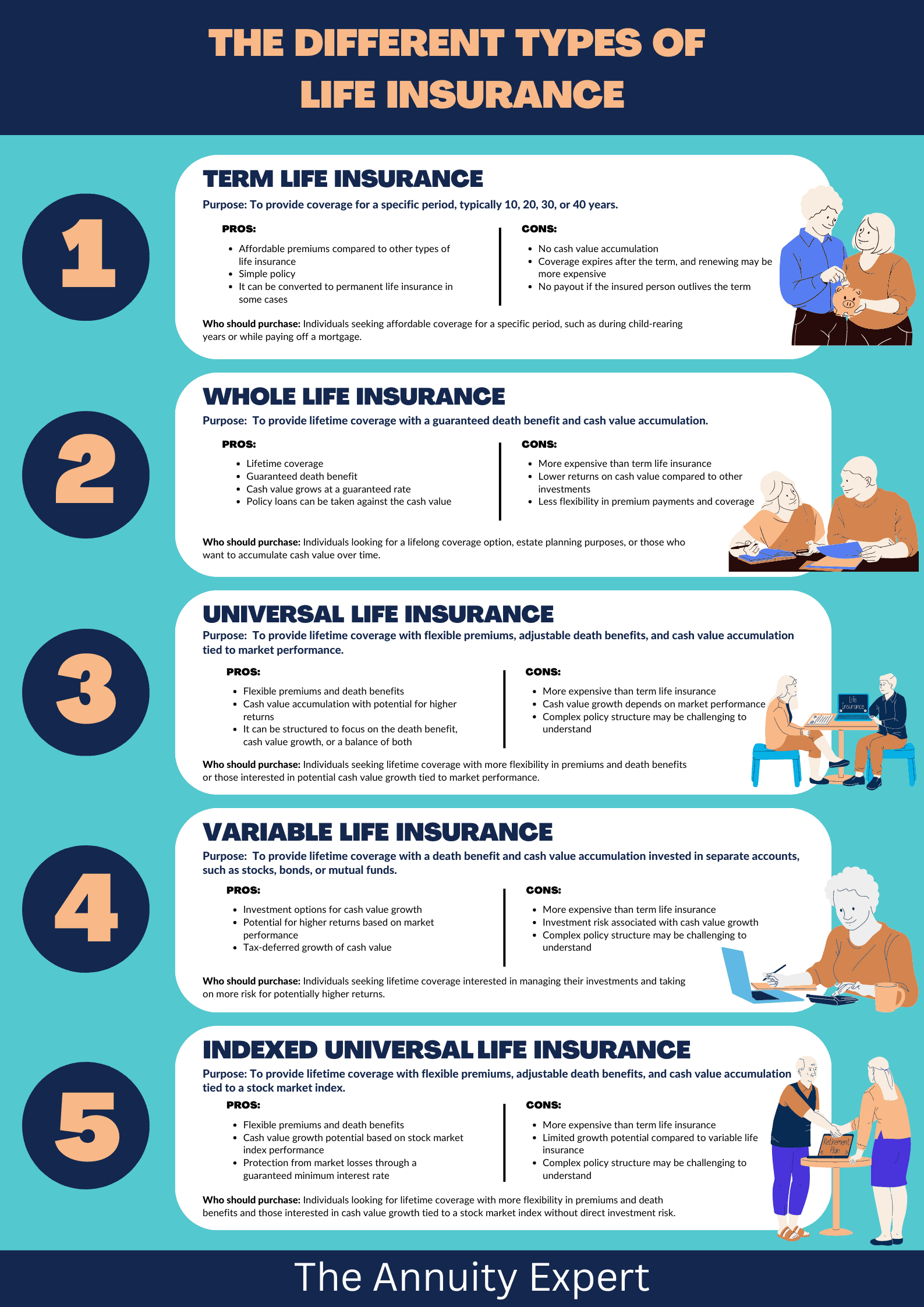
The Four Main Types of Adjustable Life Insurance
1. Current-Assumption Universal Life (UL):
Earns interest at a declared rate that the insurer sets each year. Rates can go up or down based on market conditions, but there’s usually a minimum guaranteed rate.
2. Guaranteed Universal Life (GUL):
Designed to keep the death benefit for your entire life, often at the lowest cost. It builds little cash value and requires steady payments to maintain the guarantee. Think of it as a “term life policy that never expires.”
3. Indexed Universal Life (IUL):
Credits interest based on the performance of a market index (like the S&P 500), but your principal is protected from losses. Interest rates are capped, so gains are limited, but your money won’t drop when the market does.
4. Variable Universal Life (VUL):
Invests your cash value in mutual-fund-like subaccounts. This allows for greater growth potential—but also exposes you to market risk and higher fees. It requires active management and risk tolerance.
How Policy Funding and Adjustments Work
- Premium Payments: You can pay more, less, or even skip payments temporarily, as long as your cash value can cover the monthly charges.
- Cash Value Growth: Builds through credited interest or investment returns, minus policy expenses.
- Policy Adjustments: You can raise or lower your death benefit, change how you fund the policy, and take out loans or withdrawals.
- Policy Loans and Withdrawals: These can be tax-free if structured correctly, but if the policy lapses, you could owe income tax on all gains.
Important: Many people misunderstand adjustable life as “self-sustaining.” It’s not. You need consistent reviews and proper funding to ensure it lasts a lifetime.
Pros and Cons
Pros:
- Flexible payments: Adapt your premiums to your income.
- Adjustable death benefit: Increase or reduce coverage as your family or business needs change.
- Cash value growth: Build savings that can be borrowed against or used in emergencies.
- Lifelong coverage: Can last your entire life when properly funded.
- Tax advantages: Cash value grows tax-deferred; loans may be tax-free.
Cons:
- Variable results: Returns depend on market conditions and insurer performance.
- Policy lapse risk: If underfunded, it can terminate later in life when insurance costs are highest.
- Complex management: You must monitor funding, charges, and performance.
- Expensive if misused: Skipping or lowering payments too often leads to higher costs later.
Helpful Tip: Because this type of contract allows you to change your payment schedule, it operates very similarly to universal life. Ultimately, an advantage of owning a flexible premium life insurance policy would be the ability to reduce your out-of-pocket costs during tough financial times without the risk of your coverage lapsing.

What Determines the Cost
- Age and health: Younger and healthier applicants pay less.
- Policy type: GULs cost less than IULs or VULs.
- Funding level: Paying more upfront can keep long-term costs lower.
- Riders and benefits: Adding features such as long-term care or chronic illness riders increases costs.
Smart Ways to Save Money on Adjustable Life Insurance
- Shop multiple carriers: Independent brokers can compare dozens of carriers to find the best value.
- Choose the right policy type: GUL for low-cost lifelong coverage; IUL for growth potential.
- Overfund early: Contribute more in early years to reduce risk later.
- Avoid heavy loans: Keep your policy from collapsing under debt.
- Blend with term insurance: Combine term coverage for affordability during high-need years.
- Annual reviews: Adjust funding before problems develop.
Riders Worth Considering
- Chronic/Terminal Illness Rider: Access part of your death benefit if you become seriously ill.
- Long-Term Care Rider: Use part of your benefit for care expenses. Compare to standalone LTC insurance for better coverage.
- Waiver of Premium Rider: Keeps your policy funded if you become disabled.
- Overloan Protection Rider: Prevents policy lapse when loans are outstanding in later years.
Alternatives to Adjustable Life Insurance
- Term Life: Simple and affordable for temporary needs.
- Whole Life: Stable premiums and guaranteed cash growth.
- Guaranteed Universal Life (GUL): Low-cost permanent protection with fewer moving parts.
- Annuities: For retirement income, Fixed Indexed Annuities (FIAs) with a GLWB (Guaranteed Lifetime Withdrawal Benefit) provide contractually guaranteed income for life—typically between 5%–8%—that continues even after your account value is depleted. This income doesn’t even include Social Security and can be paired with life insurance to protect your spouse.
When Adjustable Life Insurance Makes the Most Sense
It works best for people who want long-term flexibility—such as those expecting significant life changes, income growth, or business evolution. You can adjust your plan as your needs evolve, unlike rigid policies that require a full replacement to make changes.
When You Might Choose a Different Policy
Choose GUL or Term Life if you prefer predictability, lower cost, and no ongoing management. Choose an FIA with GLWB if your main goal is retirement income instead of leaving a legacy.
How to Buy the Right Adjustable Life Insurance
- Define your goal: Are you seeking income protection, cash growth, or legacy planning?
- Pick your type: UL, GUL, IUL, or VUL, depending on your needs and comfort with risk.
- Plan your funding: Decide how much and how often you’ll contribute.
- Add riders wisely: Only include benefits you’ll realistically use.
- Review annually: Keep the policy funded and aligned with your goals.
- Use an independent broker: They compare many insurers to find the best pricing and flexibility.
Expert Recommendation: Because the fees and funding requirements for these policies can be complex, it is best to consult a professional. You can talk to a licensed adjustable life insurance broker to receive a customized illustration and a side-by-side comparison of top carriers.
Stop overpaying for life insurance. Contact The Annuity Expert for free quotes from over 25 top-rated companies. We’ll help you design an adjustable life policy that fits your budget, stays funded for life, and meets your long-term goals.
Book A Free Consultation
Get help from a licensed financial professional. This service is free of charge.
Let Us Answer Your Questions
Not quite ready for a meeting, but you have a question that needs answering? We’re happy to help. Leave an inquiry below, and one of our staff will respond via email.
Questions From Our Readers
What is flexible premium adjustable life insurance?
Flexible premium adjustable life insurance is a type of life insurance that allows policyholders to adjust their premiums, death benefits, and other policy features. This flexibility can benefit those who want to keep their life insurance coverage in force but need to adjust their budget or coverage needs.
Can I cash in a flexible premium adjustable life insurance policy?
You can typically cash in a flexible premium adjustable life insurance policy. However, the process and the amount you can receive will depend on the specific policy and the insurance company issuing it. For example, some policies may allow you to withdraw some or all of the money you have paid into the policy, while others may only allow you to borrow against the cash value.
What is the most flexible type of life insurance?
Universal or adjustable life policies might be just the solution for you. You can even raise your death benefit after passing an additional medical assessment! In addition, this type of policy allows much more wiggle room than other whole-life plans, granting you greater control over what happens after your passing.
What is the benefit of adjustable life insurance?
Adjustable life insurance is an ideal way to provide you with ultimate control over your policy’s death benefit and premium payments. This type of plan may be best for those who want maximum flexibility in their life insurance coverage.
Is life insurance a good retirement option?
While it isn’t necessary, doing so can provide your loved ones with financial comfort. With the added protection of life insurance, they won’t be burdened by payments towards your final services and debt or any loss in income that may occur when you leave them suddenly during this stage of life.
What are the pros and cons of surrendering a life insurance policy?
If you consider surrendering your life insurance policy, there are several advantages and disadvantages. Plus, if your policy has a cash value higher than the surrender fee, that money is yours to keep. Unfortunately, any applicable charges may eat up all this money; you will also likely have to pay taxes. Furthermore, without the policy upon death, there would be no death benefit left for your heirs or beneficiaries.
Twenty years ago, my mom bought a flexible premium life insurance policy from Penn Mutual with a $75K lump-sum death benefit. I’m the owner and beneficiary. I just got a notice that the policy lapsed unless I pay more to reinstate it. Is this normal, and what was the point of the lump sum?
Yes, it’s normal with flexible premium universal life policies. Unlike whole life, they don’t guarantee coverage for life with one payment. The lump sum funded the policy’s cash value, which covered insurance costs for years, but as monthly charges rose and interest crediting lagged, the cash value was depleted. Once it ran out, the policy lapsed unless more premiums were paid. This is common in older UL policies, where assumptions about interest rates and costs don’t hold over decades.