

A Breakdown For First-Time Annuity Buyers
Buying an annuity can be confusing enough. Adding “disability riders” or “waivers” to the mix often leaves first-time buyers wondering what they’re really paying for. The goal of these add-ons is simple: to help you access your money early—or get extra income—if you become disabled. But in reality, not all these features work the same way, and many people misunderstand how limited they are. Below, you’ll learn exactly how they work, the pros and cons of each, who actually benefits from them, and which alternatives might make more sense.
What Disability Riders And Waivers Do
- Disability Waiver: This feature allows you to withdraw money from your annuity without paying surrender penalties if you become disabled. It’s one of the most common built-in benefits on many fixed annuities. The insurer defines “disability,” usually requiring that a doctor certify you cannot perform your job or daily functions for at least 60–90 days.
- Confinement Waiver: You can withdraw funds penalty-free if you’re confined to a hospital or nursing facility for a certain period (often 90 days). It’s intended to help pay for care costs without losing surrender value.
- Terminal or Critical Illness Waiver: If you’re diagnosed with a terminal illness or certain critical conditions, you can access your funds without surrender penalties. This provides emergency liquidity for medical expenses.
- Income Doublers or Care Multipliers (GLWB Features): Some annuities with Guaranteed Lifetime Withdrawal Benefit (GLWB) riders promise to “double” your income for a limited time if you can’t perform basic activities of daily living (ADLs), such as bathing or dressing. However, this “doubling” rarely comes from new money—it’s typically an acceleration of your own account value.
Why These Features Exist
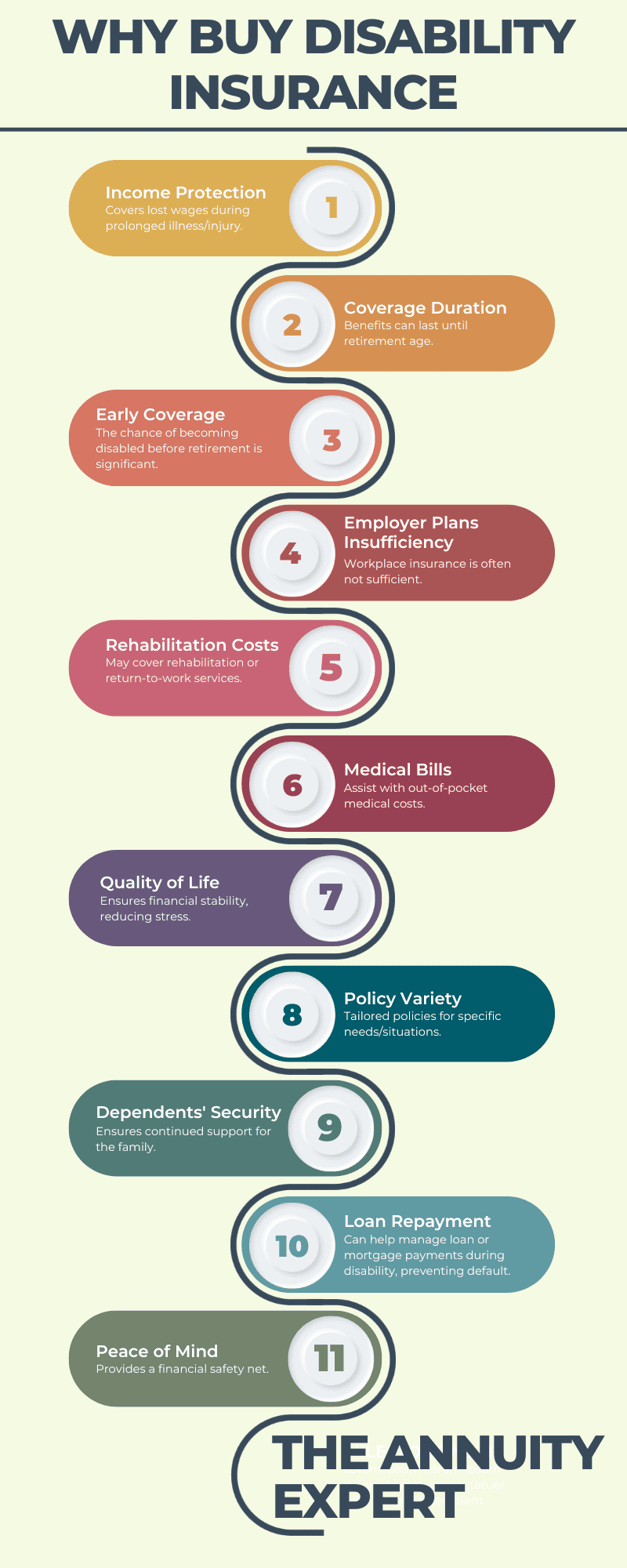
Disability waivers and riders are designed to reduce financial pressure if you face health issues before or during retirement. They give you emergency access or income without penalties, unlike other investments that might lock up your funds. But they are not disability insurance or long-term care insurance—they simply give you more flexible access to what’s already yours.
The Main Types Of Disability Features Explained
1. Annuity Disability Waiver Of Surrender Charges
How it works:
If you become disabled according to the insurer’s definition, you can withdraw money from your annuity without paying surrender charges. The waiver usually applies after the first year of ownership and lasts while the disability continues.
Pros:
- No extra fee
- Provides liquidity during hardship
- Available on many fixed and indexed annuities
Cons:
- Only avoids surrender penalties—taxes on gains still apply
- Requires proof of disability
- May only apply once per contract or for a limited time
Who needs it:
Those worried about needing early access to funds before the annuity matures.
Who doesn’t:
Retirees who already have cash reserves or other liquid savings.
2. Confinement Or Hospital Waivers
How it works:
Lets you withdraw without penalty if you’re confined to a hospital or nursing home for a required duration. You’ll typically need written confirmation from a physician or facility.
Pros:
- Provides flexibility for sudden care costs
- Often included at no cost
Cons:
- Only applies under strict confinement conditions
- Does not cover home care or assisted living in most cases
Who needs it:
Older annuity owners who may need nursing care.
Who doesn’t:
People with long-term care insurance or robust savings for care costs.
3. GLWB Disability “Income Doublers”
How it works:
When your annuity includes a Guaranteed Lifetime Withdrawal Benefit (GLWB), you receive lifetime income. If you become disabled or unable to perform ADLs, some contracts “double” that income for a limited period (often up to five years).
Pros:
- Income lasts for life
- Potentially doubles payouts temporarily
- No need to annuitize (you keep control of your money)
Cons:
- “Doubler” usually just accelerates your money, not adds new funds
- Boosts expire
- Rider fees can reduce long-term returns
Who needs it:
Retirees who want a lifetime income with some flexibility if disability strikes.
Who doesn’t:
People who think this replaces long-term care insurance—it doesn’t.
4. Long-Term Care (LTC) Annuities Or Hybrid Life Insurance
How it works:
These policies multiply your premiums if you need care—often 2–3 times your account value—to cover qualified long-term care costs.
Pros:
- True long-term care protection
- Can provide tax-free payouts for care
- May refund unused benefits as a death benefit
Cons:
- Requires underwriting
- Higher premiums than standard annuities
Who needs it:
Anyone planning for multi-year care, especially if family history includes dementia or chronic illness.
Who doesn’t:
Healthy buyers with high income and liquidity who can self-fund.
5. Disability Income Insurance
How it works:
This is a separate policy that replaces your paycheck if you can’t work. It’s often more practical for working adults than annuity riders.
Pros:
- Direct income protection
- Strong “own-occupation” coverage available
- Tax-free benefits (if premiums are paid with after-tax dollars)
Cons:
- Underwriting and medical questions required
- May not cover partial disabilities
Who needs it:
Anyone who relies on earned income and can’t afford a long work absence.
Who doesn’t:
Fully retired people living on pensions, Social Security, or annuity income.
What These Riders Cost
Many disability or confinement waivers are included for free in the contract. GLWB riders or income doublers often charge an annual fee, usually deducted from your annuity value. Costs vary by company and age. Always ask your agent to show what you’re paying for—and what you’re truly getting in return.
Tax And Withdrawal Rules
- Withdrawals from non-qualified annuities (funded with after-tax money) are taxed on gains first.
- Withdrawals from qualified annuities (like IRAs or 401(k) rollovers) are fully taxable as ordinary income.
- Withdrawals before age 59½ may still trigger a 10% IRS penalty unless you meet an exception.
Pros And Cons Of Disability Features
Pros:
- Protects access to funds during emergencies
- Adds liquidity in difficult health situations
- Some provide limited income boosts for care
- Often free or low-cost to include
Cons:
- Most benefits are limited or temporary
- Definitions of “disability” can be strict
- GLWB doublers often spend your money faster
- Not a replacement for true disability or long-term care insurance
How To Decide What’s Best For You
- If you’re young or working: Get disability income insurance first, then consider annuities later for retirement income.
- If you’re near retirement: A fixed indexed annuity with a GLWB can guarantee lifetime income, with some extra protection if disabled.
- If you’re older or concerned about care costs: Look into LTC annuities or hybrid life insurance.
- If you just want flexibility: A basic annuity with free waivers is probably enough.
How To Fund The Annuity
You can buy these annuities using:
- Cash savings (non-qualified)
- IRA or Roth IRA
- 401(k), 403(b), or 457(b) rollover
- Pension lump-sum rollover
- 1035 exchange from another annuity or life policy
How To Save Money
- Compare multiple insurers: Don’t assume all disability waivers are equal—definitions and rules differ widely.
- Avoid unnecessary riders: If you won’t need lifetime income or care benefits, skip the paid riders.
- Work with an independent broker: Captive agents can’t compare every option. An independent broker like The Annuity Expert can find better terms.
- Bundle coverage strategically: Sometimes a separate disability or LTC policy offers more value than an expensive annuity rider.
- Review annually: Disability definitions and benefits can change—make sure your coverage still fits your needs.
When To Choose Alternatives
If your main goal is long-term care protection, a stand-alone LTC or life and long-term care hybrid policy is usually a better choice. If you’re worried about losing work income, disability insurance is the right tool. Annuity waivers are best as a safety net for penalty-free access or small, temporary boosts—not as your primary defense.
Example Scenarios For First-Time Buyers
- Example 1: Middle-aged worker preparing for retirement
You’re 45, self-employed, and saving aggressively. You buy disability income insurance to protect your paycheck and later roll your retirement savings into a fixed indexed annuity with a GLWB for guaranteed income. - Example 2: Retiree wanting flexibility
At age 67, you buy a MYGA annuity with a disability waiver. If you’re ever hospitalized or disabled, you can access funds without surrender penalties. - Example 3: Couple planning for care
You and your spouse buy a joint FIA with a GLWB and an optional care “income doubler.” It ensures income for life—and doubles payments temporarily if either of you becomes disabled—while also keeping a death benefit for the survivor.
When You Should Talk To An Expert
If you’re unsure which route fits your needs, don’t guess. Disability definitions, rider costs, and withdrawal rules vary greatly between insurance companies. A small detail in the fine print can mean the difference between getting help and being denied.
Compare And Buy Annuities With Disability Riders (Free Quotes)
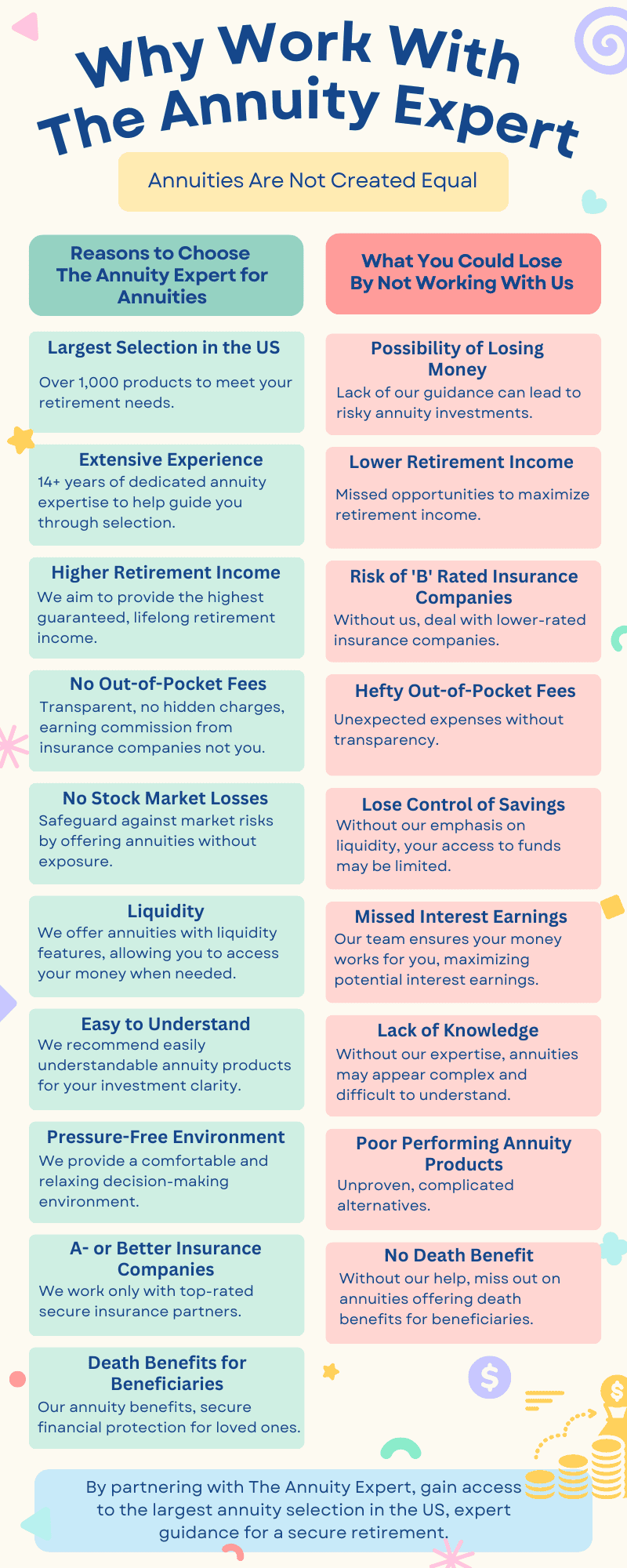
The Annuity Expert is an independent insurance and annuity agency that shops dozens of A- or better carriers to find the best coverage and lowest rider costs. Whether you need a fixed, indexed, or LTC-linked annuity, we’ll compare options side by side and help you avoid unnecessary fees.
Call: 1-770-755-1565
Request your free quote
Book A Free Consultation
Get help from a licensed financial professional. This service is free of charge.
Let Us Answer Your Questions
Not quite ready for a meeting, but you have a question that needs answering? We’re happy to help. Leave an inquiry below, and one of our staff will respond via email.