

What Is the Primary Difference Between Fixed and Variable Annuities?
The real difference:
A fixed annuity offers contractually guaranteed growth or income with principal protection.
A variable annuity ties performance to market investments, exposing your account to gains and losses, plus ongoing fees.
This single distinction changes everything: risk level, predictability, fees, income reliability, and who should even consider them.
Fixed Annuities: Guaranteed Interest, No Market Risk
How It Works
Fixed annuities pay a set interest rate, usually locked in for a certain term (e.g., 3, 5, 10 years). They’re similar to CDs but offered by insurance companies instead of banks. These can be immediate or deferred.
Pros
- Predictable and stable growth
- No market exposure
- Tax-deferred growth
- Simple structure
Cons
- Lower potential returns
- May have penalties if you withdraw early
- Doesn’t keep up with inflation
Who Needs a Fixed Annuity?
- Retirees or conservative savers who prioritize preservation of principal and guaranteed income
- Anyone rolling over a CD or cash from a retirement account who wants more competitive interest rates with better tax treatment
Who Should Avoid It?
- Those seeking high growth or inflation-adjusted income
- Younger investors with long-term horizons
Variable Annuities: Market Exposure with Optional Guarantees
How It Works
Variable annuities allow you to invest in sub-accounts (similar to mutual funds). Your account value fluctuates with market performance. Some contracts offer income or death benefit guarantees for an added fee.
Why it’s unique:
You assume market risk and pay insurance-level fees on top of investment expenses.
What variable annuities are often compared to:
Variable annuities are frequently compared to mutual funds, not CDs or fixed annuities, because performance depends on market investments.
Pros
- Unlimited upside potential
- Optional income riders provide guaranteed lifetime income even if markets drop
- Tax-deferred growth
Cons
- High fees (mortality, fund expenses, riders)
- Risk of losing money
- Complex contract language
Who Needs a Variable Annuity?
- Long-term investors who want market exposure but still want lifetime income guarantees
- High-income earners maxing out 401(k)/IRA who want tax-deferred investment options
- People concerned about outliving their money and willing to pay for income riders
Who Should Avoid It?
- Fee-conscious investors
- Those who can’t tolerate volatility
- People who won’t need income guarantees
Strategic Insight: For high earners who have maxed out their 401(k), the tax benefits of a VA can outweigh the fees. Read our guide on when to choose a variable annuity to see how it functions as an “unlimited Roth-like” bucket for market growth.
5 Key Differences Between Fixed and Variable Annuities You Must Know Before You Buy
1. Risk Level: Stability vs. Market Fluctuations
- Fixed Annuities: Offer a guaranteed interest rate and no exposure to market risk. Your money is safe, regardless of economic conditions.
- Variable Annuities: Invest in mutual-fund-like sub-accounts, meaning returns fluctuate based on market performance. Your investment can grow—but also decline.
2. Growth Potential: Guaranteed Returns vs. Market-Based Gains
- Fixed Annuities: Provide modest, steady returns over time, ensuring predictable income.
- Variable Annuities: Have higher potential returns, but gains depend on market conditions.
Downside: Variable annuities can lose value if the market underperforms.
3. Fees: Cost Differences You Need to Know
- Fixed Annuities: Have low or no fees, making them cost-effective.
- Variable Annuities: Come with high fees (investment management fees, mortality & expense charges, rider fees), which can reduce overall returns.
If you’re looking to maximize retirement income, high fees can eat away at your savings.
Regulatory Note: Because these fees can be complex, your financial professional is required to explain them in detail before you sign. Read our guide on annuity disclosure obligations to know exactly what transparency you are owed during the sales process.
4. Income Guarantees: Predictable vs. Uncertain Payouts
- Fixed Annuities: Guarantee a set income amount for life or a fixed period.
- Variable Annuities: Can provide income, but the amount varies based on market performance. Some require an optional Guaranteed Lifetime Withdrawal Benefit (GLWB) rider for income security.
Fixed annuities ensure you never run out of money, while variable annuities depend on market conditions.
5. Inflation Protection: Keeping Up with Rising Costs
- Fixed Annuities: Lock in a fixed rate, meaning your income may not keep up with inflation.
- Variable Annuities: Have higher growth potential, offering better long-term inflation protection.
Consider a fixed index annuity (FIA) for a middle ground—growth linked to market performance but with downside protection.
Fixed Annuity vs Variable Annuity: Side-by-Side Reality
- Risk Exposure:
Fixed annuities protect principal. Variable annuities don’t. - Income Predictability:
Fixed annuities excel. Variable annuities fluctuate. - Fees:
Fixed annuities are simpler and cheaper. Variable annuities stack fees. - Stress Factor:
Fixed annuities reduce financial anxiety. Variable annuities increase it during downturns.
As you are comparing fixed indexed and variable annuities, best annuities for aggressive investors can help separate higher upside potential from the market risk, fees, crediting limits, and guarantee tradeoffs used to get it.
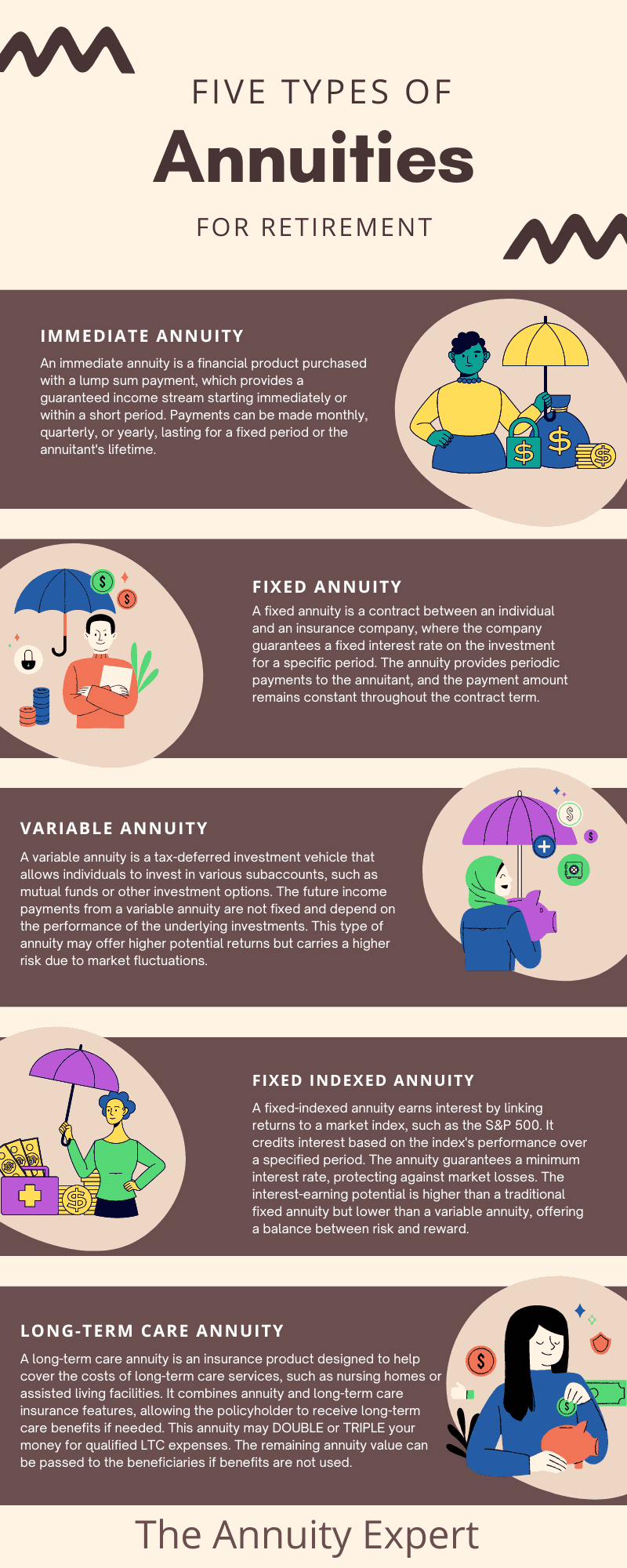
Deferred Variable Annuities vs. Deferred Fixed Annuities
- Deferred Fixed Annuity: This is a type of fixed annuity where you receive payments at a future date rather than immediately. It’s a way to defer your income until retirement to enjoy tax benefits.
- Deferred variable annuity: This is a variable annuity where the income is deferred to a later date. The amount you’ll receive depends on the performance of your chosen investments.
Fixed Indexed Annuity vs Variable Annuity
Fixed Indexed Annuity (FIA):
- Index-linked upside with no direct market losses
- Growth is credited based on index performance
- Principal protection remains intact
- Lower fees than variable annuities
- Designed for retirement income planning
Variable Annuity:
- Direct exposure to market volatility
- Gains and losses affect account value
- Higher fees
- Income riders reduce net returns
- More complexity, less predictability
Helpful Tip: Check our fixed indexed vs variable annuity comparison to find a solution that offers principal protection with some upside potential.
Hard Truths Most People Aren’t Told
- Fixed annuities are insurance products—not investments
- Variable annuities are investment products disguised as insurance
- Complexity benefits sellers, not buyers
- Income reliability matters more than theoretical returns in retirement
- Comparing annuities without income goals leads to bad decisions
Bottom Line
If you want certainty, income reliability, and lower stress, a fixed annuity usually does the job better.
If you want market exposure with added cost and risk, a variable annuity delivers exactly that.
Neither is automatically right. One is often misunderstood.
Take the Next Step
Contact The Annuity Expert to compare fixed, indexed, and variable annuity quotes from top-rated insurance companies.
This is a free service, with no obligation, and helps you avoid costly mistakes by comparing structures side-by-side before buying.
Making the wrong choice is expensive. Getting help is not.
Book A Free Consultation
Get help from a licensed financial professional. This service is free of charge.
Let Us Answer Your Questions
Not quite ready for a meeting, but you have a question that needs answering? We’re happy to help. Leave an inquiry below, and one of our staff will respond via email.
Questions From Our Readers
Is variable or fixed annuity better?
For money you cannot afford to expose to market losses, we prefer a fixed annuity. If you want market growth, we would compare a separate investment portfolio before a variable annuity. The choice should follow the money’s job, not a sales pitch promising the best of everything.
Why would someone choose a variable annuity over a fixed annuity?
Someone may choose a variable annuity over a fixed annuity for potentially higher investment returns, flexibility in investment options, and the ability to hedge against inflation through exposure to the stock market.
What is the disadvantage of fixed annuities?
A disadvantage of fixed annuities is that they typically offer lower potential returns compared to variable annuities or other investment options, which may limit long-term growth potential.