

What to Expect, How Long It Lasts, and Ways to Stretch It
Retiring with $250,000 in savings is possible, but the outcome depends on your lifestyle, health, Social Security benefits, other income sources, and how you manage withdrawals. Below, we expand the analysis to show what $250k really provides, both for single retirees and couples, with annuity and Social Security income examples.
$250,000 is the perfect amount to create a permanent income stream that covers your essential bills like utilities and healthcare. See how much monthly income a $250,000 Annuity provides
How Long $250,000 Can Last in Retirement
- Rule of Thumb (4% Rule): $250k provides about $10,000 per year in withdrawals. Without Social Security, this isn’t enough for most retirees.
- With Social Security: The average Social Security benefit today is typically in the $20,000–$30,000 per year range per person, depending on work history and claiming age. Benefits also rise over time with cost-of-living adjustments (COLAs). Combining these with withdrawals or annuity income raises the total income into a livable range for many.
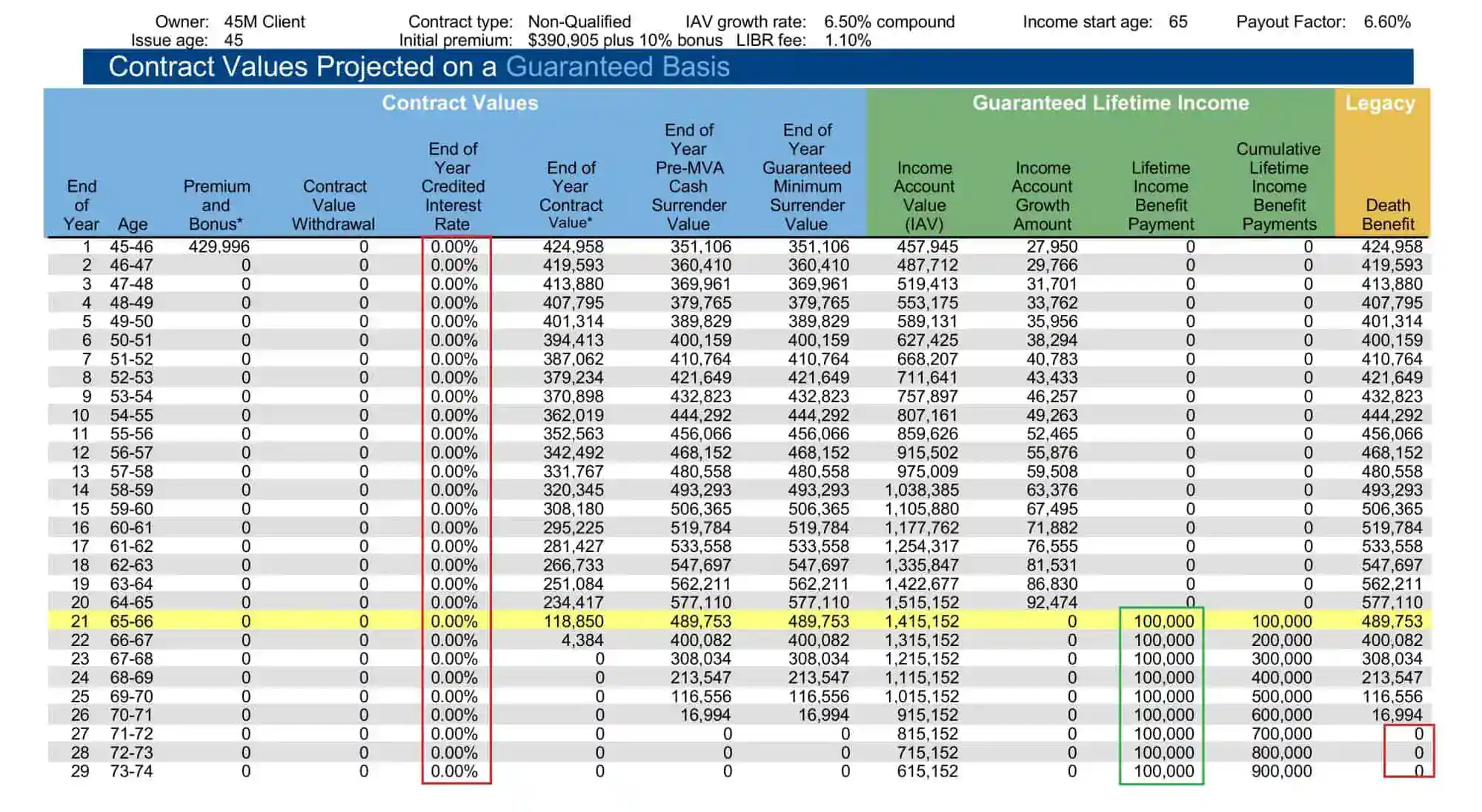
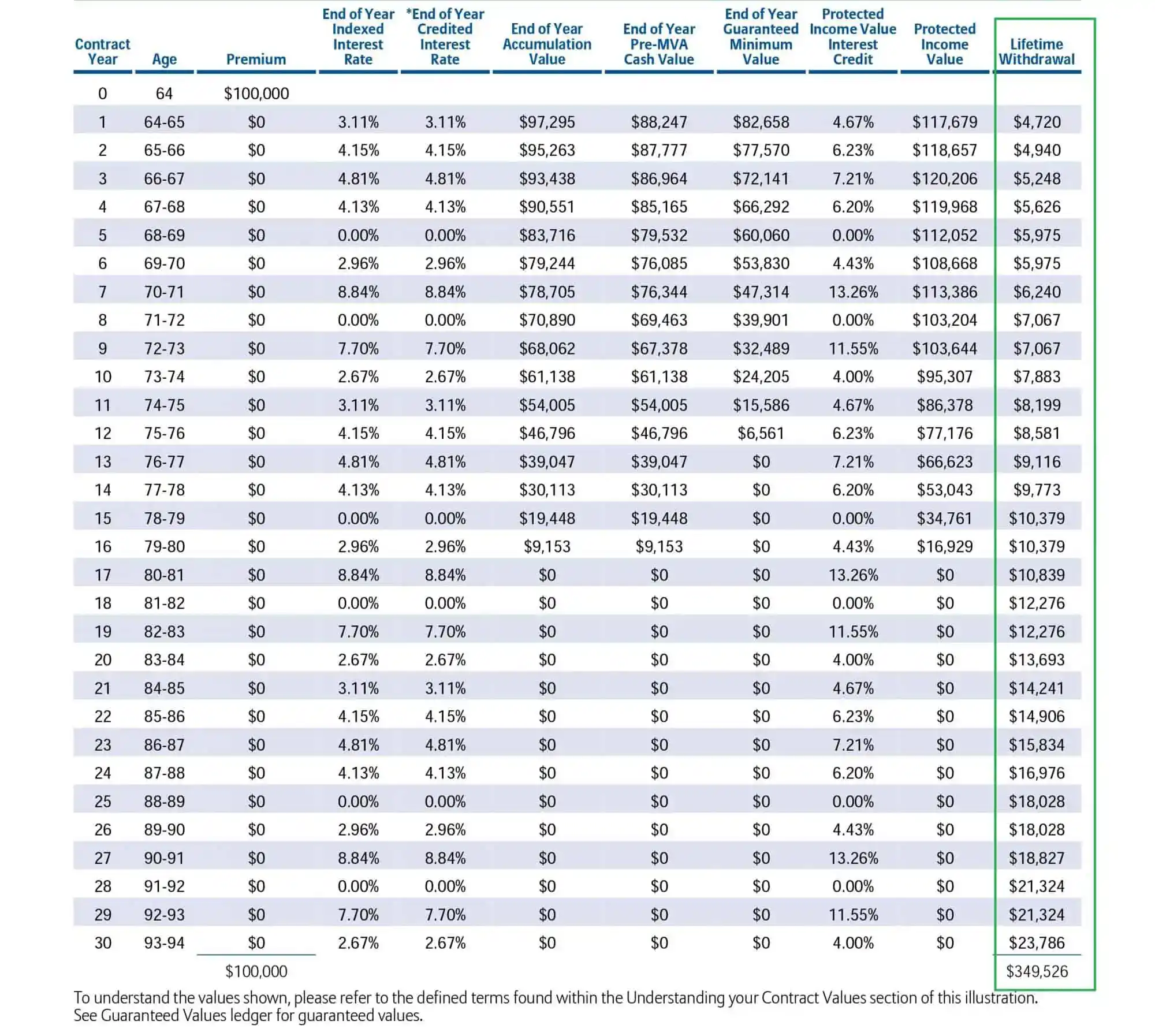
- With an Annuity: Converting $250k into an annuity with a guaranteed lifetime withdrawal benefit (GLWB) creates predictable income for life, regardless of market performance.
Comparing Annuity Options
- Single Premium Immediate Annuity (SPIA): Provides higher immediate income but no flexibility.
- Fixed Indexed Annuity (FIA) with GLWB: Provides income for life, market-linked growth, and legacy protection.
- Multi-Year Guaranteed Annuity (MYGA): Good for tax-deferred growth if you’re not ready to start income yet.
Annuity Calculator
Our annuity calculator helps you find the best annuity rates for retirement. It provides personalized quotes from top-rated insurance companies and compares rates to give you accurate annuity payouts. This tool estimates guaranteed lifetime annuity payments, either immediately or deferred.
Note: With a Guaranteed Lifetime Withdrawal Benefit (GLWB), you maintain control of your money, earn interest to grow your savings, and stay protected from stock market downturns. Plus, any unused balance will pass directly to your beneficiaries in a lump sum.
4% Rule vs. Annuity Income
| Strategy | Annual Income | Monthly Income | Duration |
|---|---|---|---|
| 4% Rule (Systematic Withdrawals) | $10,000 | ~$833 | ~25–30 years (if markets cooperate) |
| Annuity GLWB – Start at 62 | $18,000 | ~$1,500 | Lifetime |
| Annuity GLWB – Start at 67 | $19,650 | ~$1,638 | Lifetime |
| Annuity GLWB – Start at 70 | $21,406 | ~$1,784 | Lifetime |

Income Projections Combining Annuities with Social Security
Social Security + Annuity Income Examples (Individual)
Here’s how a single retiree’s income could look if they combine Social Security benefits with a $250k annuity using a GLWB:
| Retirement Age | Social Security (Annual)* | Annuity GLWB (Annual) | Total Annual Income | Total Monthly Income (Approx.) |
|---|---|---|---|---|
| 62 | ~$20,000 | $18,000 | $38,000 | ~$3,166 |
| 67 | ~$26,000 | $19,650 | $45,650 | ~$3,804 |
| 70 | ~$31,000 | $21,406 | $52,406 | ~$4,367 |
*Estimates only — actual Social Security depends on lifetime earnings and claiming strategy.
Social Security + Annuity Income Examples (Couples)
For couples, the numbers look stronger. Assuming both spouses have average Social Security and combine with one $250k annuity:
| Retirement Age | Combined Social Security (Annual)* | Annuity GLWB (Annual) | Total Annual Income | Total Monthly Income (Approx.) |
|---|---|---|---|---|
| 62 | ~$40,000 | $18,000 | $58,000 | ~$4,833 |
| 67 | ~$52,000 | $19,650 | $71,650 | ~$5,971 |
| 70 | ~$62,000 | $21,406 | $83,406 | ~$6,950 |
*Couple estimates assume both spouses have work histories that qualify for benefits.
Ways You Can Fund an Annuity
Annuities can be purchased with money from retirement accounts, personal savings, or through tax-free transfers. The funding source you choose determines how your annuity is taxed and how withdrawals work in retirement.
Qualified Retirement Accounts
Pre-tax retirement accounts can be rolled into an annuity to keep tax-deferred growth. These include:
- Traditional IRA
- 401(k) (including former employer plans)
- 403(b) (for schools, hospitals, and nonprofits)
- 457(b) (for government and nonprofit employees)
- Thrift Savings Plan (TSP) (federal employees and military)
- 401(a) (employer-sponsored defined contribution plans)
- SEP IRA (Simplified Employee Pension for self-employed)
- SIMPLE IRA (Savings Incentive Match Plan for Employees)
- Keogh/HR-10 Plans (for self-employed professionals and small businesses)
Rolling these into an annuity keeps the tax-deferred status until you start taking withdrawals.
Non-Qualified Accounts
After-tax savings such as cash, CDs, or brokerage assets can fund an annuity. Only the earnings are taxed when withdrawn.
Roth Accounts
Roth IRAs and Roth 401(k)s can be rolled into Roth annuities, offering tax-free growth and tax-free lifetime income when rules are met.
1035 Exchanges
You can transfer money from one annuity or life insurance policy to another via a 1035 exchange, avoiding immediate taxes.
Other Funding Sources
Inheritance cash, severance packages, or proceeds from the sale of property or a business can also be used to buy an annuity.
Alternatives to Annuities
Not everyone wants an annuity. Alternatives include:
- Bond Ladders: Provide a predictable cash flow by staggering bond maturities, but there is no lifetime guarantee.
- TIPS (Treasury Inflation-Protected Securities): Protect against inflation by adjusting principal with CPI, but also lack a lifetime guarantee.
- Dividend stocks: Growth potential, but income isn’t guaranteed.
- CDs: Safe but limited growth.
Important: These don’t protect against outliving savings like annuities do.
The Impact of Inflation
One of the biggest risks in retirement is inflation slowly reducing your purchasing power. Even if your income looks strong today, 20–30 years later, it may not feel the same.
Here’s how a $3,800/month income at age 67 changes with 3% annual inflation:
| Years in Retirement | Nominal Income | Equivalent in Today’s Dollars |
|---|---|---|
| Year 1 | $3,800 | $3,800 |
| Year 10 | $3,800 | ~$2,820 |
| Year 20 | $3,800 | ~$2,095 |
| Year 30 | $3,800 | ~$1,555 |
Takeaway: Fixed incomes lose buying power over time. This is why some retirees choose annuities with increasing payout riders or blend guaranteed income with growth-oriented investments like fixed indexed annuities.
Who Can Retire on $250k?
- Retirees with low expenses and no mortgage.
- Those living in low-cost states or planning part-time work.
- Couples combining annuity income with two Social Security checks.
Who Shouldn’t Rely on $250k Alone?
- Early retirees who must stretch funds for 30+ years.
- High spenders or those with expensive health care needs.
- Retirees without additional savings, pensions, or insurance protections.
Insurance That Protects a $250k Nest Egg
- Long-Term Care Insurance: Shields your savings from being wiped out by nursing home or assisted living costs, which can drain $250k in just a few years.
- Bridge Health Insurance (if under 65): Covers healthcare costs if you retire before Medicare eligibility, preventing high out-of-pocket medical expenses during the “bridge years.”
- Medicare + Supplements (if 65 or older): Reduces surprise medical bills by filling in the gaps Medicare doesn’t cover, ensuring predictable healthcare costs in retirement.
- Disability Insurance (for early retirees): Provides income protection before Social Security eligibility if you leave work due to health issues.
- Life Insurance: Provides financial protection for surviving spouses and helps create a legacy for your family.
Best Life Insurance Options for Retirement:
✅ Term Life Insurance – Covers temporary needs but expires.
✅ Guaranteed Universal Life (GUL) – Permanent coverage with lower premiums.
✅ Whole Life Insurance – Builds cash value and provides lifelong protection.
✅ Survivorship Life Insurance – Covers both spouses and pays out after both pass.
Tips to Make $250,000 Last Longer
- Delay Social Security until 67–70 to maximize income.
- Use annuities with GLWBs for lifetime income security.
- Downsize or move to lower-cost areas to cut expenses.
- Keep part-time or seasonal work for supplemental cash flow.
- Protect against catastrophic costs with long-term care insurance.
- Blend guaranteed income with growth strategies to fight inflation.
Final Thoughts: Can You Retire with $250,000?
Yes, but you need the right withdrawal strategy to ensure a lifetime income. The best solution? A fixed index annuity with GLWB, which provides higher payouts, market protection, and security for life. Additionally, life insurance can protect a surviving spouse from financial hardship.
If you want to see exact monthly income projections based on your age, Social Security statement, and lifestyle needs, contact The Annuity Expert. We’ll provide free quotes and help you compare the best annuity and insurance solutions to make your $250k last for life.
Book A Free Consultation
Get help from a licensed financial professional. This service is free of charge.
Let Us Answer Your Questions
Not quite ready for a meeting, but you have a question that needs answering? We’re happy to help. Leave an inquiry below, and one of our staff will respond via email.